Peut-on utiliser l'IA dans l'industrie sans risque ?
Oui pour la méthode, non pour vos secrets : n'entrez jamais nomenclature, paramètres de procédé, prix ou détails d'automates dans une IA grand public.
La réponse tient en une phrase. L'IA peut vous aider sur la méthode, mais pas avec vos secrets industriels. Elle sait optimiser un procédé, rédiger un brouillon de contrat fournisseur ou guider un dépannage. Elle n'a besoin, pour cela, ni de votre nomenclature réelle, ni de vos paramètres de procédé, ni de vos prix négociés. Collés dans un ChatGPT grand public, ces éléments partent chez un tiers. Ils peuvent être stockés et relus. Et un secret d'affaires n'est protégé que tant qu'il reste secret. La bonne méthode existe : anonymisez les détails sensibles avant l'envoi, et gardez les systèmes de contrôle hors des outils publics.
Vos secrets industriels sont les joyaux de la couronne
Dans l'industrie, la valeur est souvent dans le savoir-faire. Une formule. Des paramètres de procédé. Des tolérances. Un outillage. Une nomenclature complète, la fameuse BOM (Bill of Materials, la liste des composants et matières). Ces éléments peuvent valoir plus que n'importe quel produit fini. Ils forment un plan que vos concurrents rêveraient de lire.
Le droit les protège sous le nom de secret d'affaires. Mais cette protection a une condition centrale. D'après l'OMPI (Organisation Mondiale de la Propriété Intellectuelle, ou WIPO), une information n'est un secret d'affaires que si elle réunit trois critères. Elle est réellement secrète, donc pas connue ni facilement accessible dans le milieu concerné. Elle a une valeur commerciale parce qu'elle est secrète. Et son détenteur a pris des mesures raisonnables pour la garder secrète.
Le point clé est là. Le secret est la condition de la protection. L'OMPI précise qu'un secret d'affaires ne s'enregistre pas et peut être protégé sans limite de durée. Mais uniquement tant que l'information reste confidentielle. La protection cesse dès que l'information devient publique ou n'est plus traitée comme confidentielle. Divulguer volontairement une formule ou une nomenclature à un tiers peut donc fragiliser le statut même qui la protège.
Ce que dit la loi européenne : la directive 2016/943
En Europe, la Directive (UE) 2016/943 harmonise la protection du secret d'affaires. Elle vise l'obtention, l'utilisation et la divulgation illicites de savoir-faire et d'informations commerciales non divulgués dans le marché intérieur. Elle donne au détenteur l'accès à des recours civils quand un secret est détourné.
La directive reprend le même test en trois volets que l'OMPI. Elle traite certaines obtentions, utilisations ou divulgations comme illicites, dans des cas définis. Mais elle reconnaît aussi des cas licites ou exemptés. La liberté d'expression. Le lancement d'alerte sur une faute d'intérêt public. Les divulgations permises par la loi. La leçon est simple. La protection dépend de la façon dont l'information a été gérée et gardée confidentielle, pas seulement de sa valeur.
Le risque cyber : requêtes stockées et systèmes de contrôle
Il y a aussi un angle sécurité. Le NCSC (National Cyber Security Centre, l'autorité cyber britannique) a une position claire sur les LLM grand public. Les requêtes tapées dans un service public comme ChatGPT sont visibles par le fournisseur. Elles sont stockées. Elles peuvent servir à améliorer le modèle plus tard. Le fournisseur, ses partenaires ou ses sous-traitants pourraient donc, en principe, lire ce que vous avez soumis. Le conseil pratique du NCSC est net : n'incluez pas d'informations sensibles ou confidentielles dans vos prompts.
Le NCSC ne prône pas l'interdiction totale. Il présente le risque comme gérable. Les organisations doivent classer leurs données. Fixer des règles d'usage claires. Former le personnel. Et préférer les offres professionnelles ou entreprise, qui apportent des protections contractuelles sur le traitement des données. Le NCSC signale aussi une faiblesse persistante : l'injection de prompt dans les systèmes intégrant un LLM.
Pour un industriel, cela vise une catégorie précise. Les détails de vos systèmes de contrôle. Un automate programmable, ou PLC. Les schémas réseau de l'atelier. Partager ces éléments ne crée pas qu'un risque de confidentialité. Cela crée une exposition de sécurité. Ces détails doivent rester hors des outils publics, point.
| Donnée collée dans l'IA | Pourquoi c'est sensible |
|---|---|
| Formule, tolérances, paramètres de procédé | Secret d'affaires : la protection cesse si le secret n'est plus tenu |
| Nomenclature (BOM), outillage | Un plan complet du produit, valorisable par un concurrent |
| Liste fournisseurs, prix négociés, termes de contrat | Sensible commercialement, souvent couvert par un accord de confidentialité |
| Automate (PLC), schéma réseau, système de contrôle | Exposition de sécurité (OT), pas seulement de confidentialité |
| Dossiers salariés et de sécurité au travail | Données personnelles, soumises au droit de la protection des données |
N'oubliez pas les données personnelles et les technos réglementées
Deux autres familles méritent votre attention. D'abord, les données personnelles. Les dossiers de vos salariés et les registres de sécurité au travail restent des données personnelles. Ils sont soumis au droit de la protection des données, comme le RGPD. Une IA grand public n'est pas le bon endroit pour eux.
Ensuite, certaines conceptions peuvent relever du contrôle des exportations. C'est un point à noter de façon générale. Il dépend de la technologie précise et de la juridiction, par exemple les régimes dits à double usage. Une divulgation négligente peut alors porter un poids juridique distinct. Le message n'est pas d'invoquer un régime précis. C'est de savoir que certaines données ne doivent jamais quitter l'usine.
La parade : anonymiser avant l'envoi
Bonne nouvelle : l'IA reste utile pour l'industrie. Elle peut expliquer une méthode d'optimisation. Comparer des approches de maintenance. Structurer un brouillon de contrat. Pour cela, elle raisonne sur la forme de votre problème, pas sur vos valeurs réelles. Anonymisez les détails sensibles, et l'aide arrive sans le risque.
- Références de pièces et numéros de nomenclature.
- Paramètres de procédé, tolérances et formules.
- Noms de fournisseurs, prix négociés et termes de contrat.
- Détails d'automates, schémas réseau et systèmes de contrôle (à garder hors des outils publics).
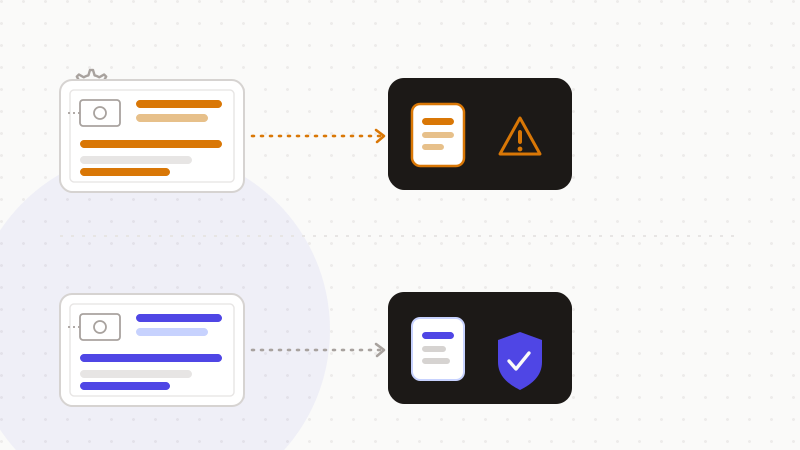
La marche à suivre est simple. Vous préparez votre question. Vous remplacez chaque détail sensible par un jeton. L'IA travaille sur la structure. Puis vous restaurez les vraies valeurs dans sa réponse, en local, sur votre poste.
- 1Repérez les secrets dans votre texte : références, paramètres, prix, fournisseurs.
- 2Remplacez-les par des jetons réversibles, côté navigateur.
- 3Envoyez seulement le texte anonymisé à l'IA.
- 4Restaurez les vraies valeurs dans la réponse, en local.
- 5Pour un usage régulier, préférez un outil entreprise avec accord de traitement et clause de non-entraînement.
C'est le rôle d'ONYRI Sanitize. Le moteur détecte les données sensibles — références de pièces, paramètres, prix, noms de fournisseurs — et les remplace par des jetons réversibles avant l'envoi. La détection et le mapping restent dans votre navigateur. Seul un texte anonymisé atteint le modèle. L'IA n'y trouve que des jetons, jamais vos secrets industriels réels. Vous gardez l'aide de l'IA, sans fragiliser le secret d'affaires que l'OMPI, la directive 2016/943 et le NCSC vous invitent à protéger.
Questions fréquentes
- Peut-on utiliser l'IA dans l'industrie sans risque ?
- Oui pour la méthode, non pour vos secrets. L'IA peut optimiser un procédé, structurer un contrat ou guider un dépannage sans donnée réelle. Mais n'entrez jamais votre nomenclature, vos paramètres de procédé, vos prix fournisseurs ou vos détails d'automates dans un ChatGPT grand public. Un secret d'affaires n'est protégé que tant qu'il reste secret, et le NCSC rappelle que ces requêtes sont stockées. Anonymisez ces détails avant l'envoi.
- Coller ma nomenclature ou mes paramètres dans l'IA détruit-il mon secret d'affaires ?
- Pas automatiquement, mais cela peut le fragiliser. D'après l'OMPI, un secret d'affaires n'est protégé que s'il reste secret et que vous prenez des mesures raisonnables pour cela. Confier ces données à une IA grand public, où elles sont stockées, n'est pas une mesure raisonnable. Cela peut affaiblir la confidentialité dont dépend toute la protection. La parade est d'anonymiser avant l'envoi.
- Puis-je partager des détails d'automates ou de réseau avec une IA ?
- Non, gardez-les hors des outils publics. Les détails de systèmes de contrôle, d'automates (PLC) ou de réseau d'atelier créent une exposition de sécurité, pas seulement de confidentialité. Le NCSC conseille de classer ses données et de préférer des offres entreprise avec protections contractuelles. Pour ces éléments critiques, la règle est simple : ils ne quittent pas l'usine.
Sources et références
- Frequently Asked Questions on Trade Secrets (secret = condition de protection, test en trois volets, durée illimitée) — Organisation Mondiale de la Propriété Intellectuelle (OMPI / WIPO)
- Directive (UE) 2016/943 sur la protection des secrets d'affaires (obtention/usage/divulgation illicites, recours civils) — EUR-Lex (Journal officiel de l'Union européenne)
- ChatGPT and large language models: what's the risk? (requêtes stockées, ne pas soumettre d'info confidentielle, classer, offres entreprise) — UK National Cyber Security Centre (NCSC)
Gardez vos données sensibles dans votre navigateur
ONYRI Sanitize détecte et masque vos données sensibles avant l'envoi à l'IA, puis restaure la réponse — du nom à la clé API.