When deleting a chat doesn't erase it
Deleting an AI chat doesn't guarantee erasure. In 2025, a court ordered OpenAI to retain all ChatGPT logs — including deleted conversations. What it implies.
Deleting a conversation in an AI doesn't guarantee it's erased. In 2025, in the litigation between The New York Times and OpenAI, a court ordered OpenAI to preserve all ChatGPT output logs — including conversations that users had deleted and ones opened as a “temporary chat.” In other words: a legal obligation can suspend deletion policies. The only data you can be sure won't be retained is the data you never sent.
What the court ordered
On May 13, 2025, a judge ordered OpenAI to “preserve and segregate all output log data that would otherwise be deleted,” on a going-forward basis until further order. In practice, that covered even content users had chosen not to keep — by deleting conversations or using a temporary chat. OpenAI publicly objected, calling the order a privacy overreach and a break with established norms. The retention required by that order has since been lifted — but the precedent stands: a third party can be compelled to keep what you thought you'd erased.
“Deleted” doesn't mean “erased”
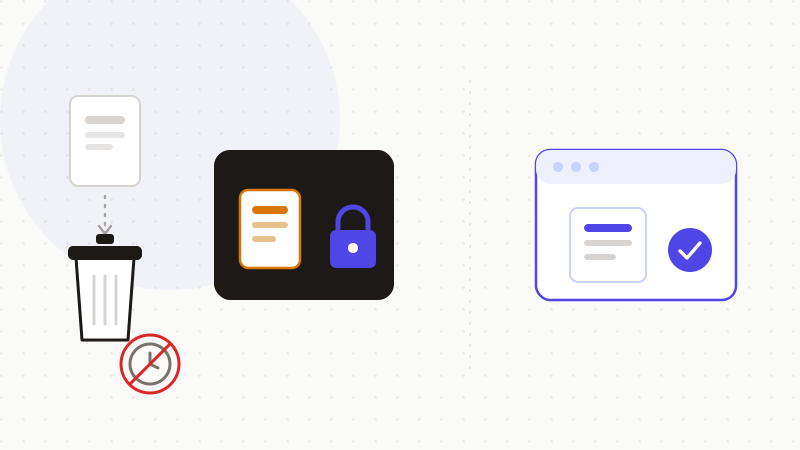
On most services, “delete” removes the item from your view and starts a deferred server-side erasure. But between your click and the actual erasure, several things can intervene: backups, technical logs, and — as here — legal preservation duties (a “litigation hold”) that suspend any deletion. What looks gone from your interface can remain, segregated, on third-party servers.
| What you assume | What can happen |
|---|---|
| “I delete the conversation, it's gone” | A legal obligation can force its retention |
| “A temporary chat leaves nothing” | The content can be preserved anyway |
| “It's erased within 30 days” | The erasure window can be suspended |
Why it's structural, not a one-off
This mechanism doesn't depend on a particular provider. As soon as data is entrusted to a third-party service, it enters a perimeter of obligations beyond your reach:
- litigation-related preservation duties can freeze any deletion;
- backups and technical logs outlive an interface “delete”;
- retention rules vary by country and account type.
The fix: never send the sensitive data
If retention is out of your hands once data is transmitted, the only solid guarantee is upstream: don't transmit the sensitive data. Anything that never left your browser can't be retained, produced or exposed by a third party.
- 1Assume every prompt can be retained, whatever your settings say.
- 2Remove the sensitive data before sending instead of relying on a future deletion.
- 3Keep the token↔value mapping local, to stay in control of the original.
That's ONYRI Sanitize's logic: the engine detects sensitive data and replaces it with reversible tokens before sending; detection and the token↔value mapping stay in your browser, and only anonymized text reaches the AI. Whether a log is kept or not, it doesn't contain your real information.
Frequently asked questions
- Does deleting a ChatGPT conversation really erase it?
- Not always. In 2025, a court ordered OpenAI to preserve all output logs, including deleted conversations and temporary chats. A legal obligation can suspend erasure, even after the item disappears from your interface.
- Does a “temporary chat” guarantee nothing remains?
- No. The 2025 order also covered content users had chosen not to keep. A tool-side delete feature doesn't override a legal duty to preserve.
- How can I be sure data isn't retained?
- By not sending it. Anything that never leaves your browser can't be retained by a third party. An anonymization engine swaps the sensitive data for a token before sending, and restores the answer locally.
Sources & references
- Preservation Order — The New York Times v. OpenAI (SDNY, May 13, 2025) — U.S. District Court (SDNY), via Ars Technica
- “OpenAI Loses Privacy Gambit: 20 Million ChatGPT Logs Likely Headed to Copyright Plaintiffs” — National Law Review
- “OpenAI no longer required to store all users' deleted ChatGPT logs after court ruling” — TechSpot
Keep your sensitive data in your browser
ONYRI Sanitize detects and masks your sensitive data before it reaches the AI, then restores the answer — from names to API keys.