Protéger les secrets d'affaires quand on utilise l'IA
Roadmap, R&D, contrats stratégiques : confier un secret d'affaires à l'IA peut lui faire perdre sa protection. Comment anonymiser avant le prompt.
Un secret d'affaires — procédé R&D, roadmap produit, liste de clients stratégiques, formule de prix — n'est juridiquement protégé que tant qu'il reste secret et fait l'objet de mesures de protection raisonnables. Le coller dans une IA grand public le transmet à un tiers et peut fragiliser cette protection. Avant de faire analyser ou reformuler un contenu stratégique, remplacez noms de projets, chiffres et éléments identifiants par des jetons : le modèle raisonne, sans accéder au secret.
Pourquoi divulguer fragilise la protection
La directive européenne sur les secrets d'affaires conditionne la protection à trois critères : l'information est secrète, elle a une valeur commerciale parce qu'elle est secrète, et son détenteur a pris des mesures raisonnables pour la garder secrète. Transmettre cette information à un service tiers sans cadre va à l'encontre du troisième critère — et donc de la protection elle-même.
- Procédés, méthodes et savoir-faire techniques non brevetés.
- Roadmaps, plans produit, échéances et priorités stratégiques.
- Données commerciales : prix, marges, listes de clients ou de fournisseurs clés.
- Noms de projets internes et identifiants qui relient l'information à votre stratégie.
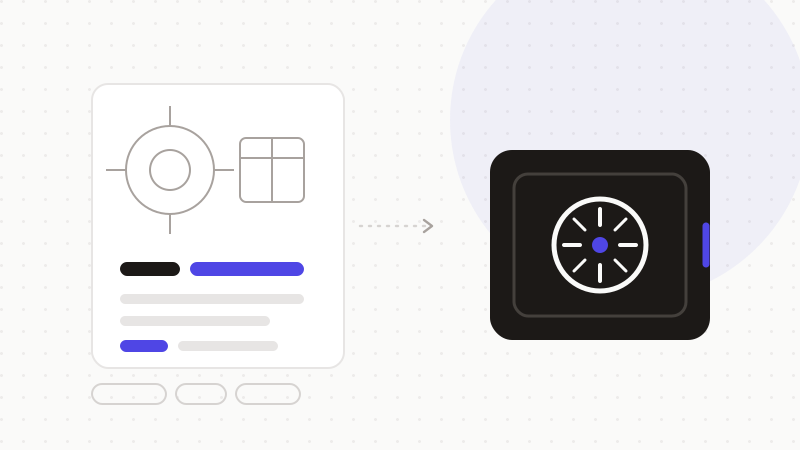
Ce qu'il faut masquer avant tout prompt
- 1Noms de code et identifiants de projets internes.
- 2Chiffres stratégiques : prix, marges, volumes, échéances.
- 3Données techniques distinctives : paramètres, cotes, configurations propres à votre savoir-faire.
- 4Noms de clients, partenaires et fournisseurs stratégiques.
Un flux qui garde le secret au coffre
- 1Détection : le moteur repère noms de projet, chiffres et éléments techniques identifiants.
- 2Tokenisation : chaque élément devient un jeton neutre, conservé en mémoire locale.
- 3Envoi : seul le texte anonymisé part vers l'IA — le secret ne transite pas.
- 4Restauration : la réponse est détokenisée dans votre navigateur, prête à exploiter en interne.
ONYRI Sanitize détecte les marqueurs stratégiques — noms de projets, URLs internes, chiffres, identifiants — et restaure la réponse côté navigateur. Vos équipes R&D et stratégie profitent de l'IA pour structurer ou reformuler, sans jamais sortir le secret de l'entreprise.
Questions fréquentes
- Confier un document stratégique à ChatGPT lui fait-il perdre sa protection ?
- Cela peut la fragiliser. La protection d'un secret d'affaires suppose des mesures raisonnables pour le garder secret ; le transmettre à un tiers sans cadre va à l'encontre de ce critère. Anonymiser avant l'envoi permet d'exploiter l'IA sans divulguer l'information protégée.
- Quelle différence entre brevet et secret d'affaires face à l'IA ?
- Un brevet est public par nature ; un secret d'affaires tire sa valeur de sa confidentialité. C'est ce dernier qui est le plus exposé par un copier-coller dans une IA : une fois divulgué, il peut perdre sa protection. D'où l'importance d'anonymiser en amont.
- Comment faire analyser une roadmap par l'IA sans la divulguer ?
- Remplacez noms de projets, dates clés et chiffres par des jetons cohérents, puis demandez l'analyse. L'IA travaille sur la structure et la logique ; après restauration côté navigateur, vous récupérez une réponse exploitable, sans que le contenu stratégique soit sorti de votre poste.
Sources et références
Gardez vos données sensibles dans votre navigateur
ONYRI Sanitize détecte et masque vos données sensibles avant l'envoi à l'IA, puis restaure la réponse — du nom à la clé API.