Peut-on utiliser l’IA pour les apps de fitness et santé ?
L'IA peut aider sans vos données de santé. Mais la plupart des apps fitness ne sont pas couvertes par HIPAA : ne collez pas cycle, poids ni symptômes.
Oui, l'IA peut vous aider pour le sport et la santé, mais pas avec vos données brutes. Elle peut bâtir un plan ou expliquer un chiffre sans rien savoir de vous. Le vrai piège est une idée fausse. Aux États-Unis, on croit sa donnée de santé protégée par la loi HIPAA. En réalité, HIPAA vise les médecins, hôpitaux et assureurs. La plupart des apps de fitness, trackers de cycle et coachs IA en sont exclus. En Europe, le RGPD est plus strict : la donnée de santé y est une « catégorie particulière ». La bonne méthode : loggez le minimum, et ne collez jamais de détails de santé identifiables dans une IA grand public.
Ce que votre montre connectée révèle vraiment
Un wearable ne compte pas que des pas. Il dresse un portrait intime et continu de vous. Votre rythme cardiaque, minute par minute. Vos cycles de sommeil. Votre poids. Les trajets GPS de vos courses. Le suivi de votre cycle menstruel.
Chaque signal peut nourrir des déductions sensibles. Vos trajets de course révèlent votre domicile et votre routine. Les données de cycle peuvent suggérer une grossesse. Une baisse d'activité peut trahir une maladie. C'est pour cela que la donnée de santé reproductive est devenue particulièrement sensible, sur le plan légal et personnel, dans certains États américains. On l'énonce ici en simple constat.
Le réflexe naturel est de tout confier à une IA. On colle son journal d'entraînement pour un plan. Son poids et son sommeil pour un conseil. Ses symptômes pour un avis. Chaque copier-coller sort ces données de votre appareil.
L'idée fausse n° 1 : « HIPAA me protège »
C'est la plus grande méprise, alors disons-le clairement. HIPAA (la loi fédérale américaine sur la vie privée en santé) est plus étroite qu'on ne le croit. Elle s'applique aux « entités couvertes » : médecins, hôpitaux, assureurs santé, pharmacies. Et à leurs sous-traitants. Pas à la plupart des apps grand public.
La différence tient à qui saisit la donnée. Quand vous entrez vos chiffres vous-même dans une app bien-être, cette donnée sort en général du champ de HIPAA. L'app peut alors la collecter, l'analyser, la partager, et parfois la vendre. Avec peu de limites fédérales. Une nuance : une app reliée à votre médecin ou votre hôpital peut, elle, tomber sous HIPAA. La règle générale reste que la plupart n'y sont pas.
L'outil interactif « Mobile Health Apps » de la FTC guide les développeurs sur ce point précis. Il pointe la loi FTC et la Health Breach Notification Rule comme les règles qui s'appliquent vraiment. Pas HIPAA.
Le vrai garde-fou américain : la FTC
Aux États-Unis, la FTC est le principal filet fédéral pour les apps de santé grand public. Sa loi (la section 5 du FTC Act) vise les pratiques déloyales ou trompeuses. Sa Health Breach Notification Rule oblige de nombreuses apps hors HIPAA à signaler un partage non autorisé de données. C'est ce cadre qui prend le relais, justement parce que ces apps sont hors HIPAA.
Le risque n'est pas théorique. En février 2023, la FTC a lancé sa toute première action au titre de la Health Breach Notification Rule. La cible était GoodRx. Selon la FTC, l'entreprise avait promis depuis 2017 de ne jamais partager de données de santé avec des annonceurs. Elle aurait pourtant partagé à plusieurs reprises les ordonnances et pathologies des utilisateurs avec des tiers, dont Facebook, Google et Criteo.
GoodRx a accepté une pénalité civile de 1,5 million de dollars. L'entreprise s'est vu interdire le partage de données de santé à des fins publicitaires. La preuve, concrète, que le risque est appliqué et non hypothétique.
| Vous pensez | La réalité |
|---|---|
| « HIPAA protège ma donnée de fitness » | HIPAA vise médecins et assureurs, pas la plupart des apps grand public |
| « Une app bien-être ne peut pas vendre mes données » | Hors HIPAA, elle le peut souvent, avec peu de limites fédérales |
| « Personne ne fait respecter ces règles » | En 2023, la FTC a sanctionné GoodRx de 1,5 M$ pour partage de données santé |
| « Mes trajets de course sont anonymes » | Ils révèlent votre domicile et votre routine quotidienne |
En Europe : la donnée de santé est « catégorie particulière »
Pour un utilisateur de l'UE ou du Royaume-Uni, la règle est plus protectrice. Sous le RGPD (article 9), la donnée de santé est une « catégorie particulière ». Son traitement est interdit par défaut. Il faut une condition précise pour l'autoriser, comme votre consentement explicite.
L'ICO, le régulateur britannique de la protection des données, précise le périmètre. La donnée de santé n'est pas que le diagnostic. C'est toute donnée qui révèle un élément sur votre état de santé. Un résultat d'analyse. Un rappel de rendez-vous. Ou une déduction tirée d'autres signaux.
L'app de fitness ou de santé est alors un « responsable de traitement ». Elle doit tenir un double standard. Une base légale au titre de l'article 6. Et une condition distincte au titre de l'article 9 pour la donnée de santé. Elle doit aussi honorer vos droits, comme l'accès et l'effacement. C'est une base bien plus solide que le patchwork américain. Elle dépend toutefois du respect réel par l'app.
La parade : minimiser, puis anonymiser
Bonne nouvelle : l'IA reste utile pour votre forme. Elle peut construire un plan, expliquer un chiffre, structurer une routine. Pour cela, elle n'a besoin d'aucune donnée qui vous identifie. Voici les gestes simples qui gardent votre santé pour vous.
- Supposez qu'une app grand public n'est pas couverte par HIPAA, sauf mention claire.
- Loggez le minimum utile : chaque champ rempli est une donnée de plus qui circule.
- Lisez les termes de partage de données de l'app avant de vous fier à elle.
- Préférez le traitement local ou sur l'appareil quand l'option existe.
La règle la plus importante concerne l'IA grand public. Ne collez jamais de détails de santé identifiables dans un chatbot généraliste. Ni votre nom avec vos symptômes. Ni votre poids exact. Ni vos dates de cycle. Ni votre historique de rythme cardiaque. Si vous voulez l'aide de l'IA, retirez d'abord les identifiants, et utilisez des chiffres arrondis ou agrégés.
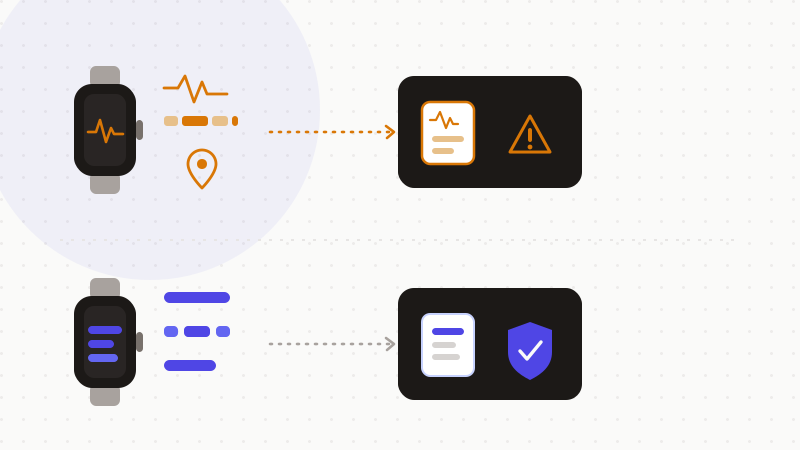
L'idée est simple. L'IA raisonne sur la forme de votre situation, jamais sur vos vraies valeurs. Vous restaurez les données réelles ensuite, en local. Voici le flux, étape par étape.
- 1Repérez les données de santé dans votre texte : cycle, poids, sommeil, rythme cardiaque, symptômes.
- 2Remplacez-les par des jetons réversibles, côté navigateur.
- 3Envoyez seulement le texte anonymisé à l'IA.
- 4Restaurez les vraies valeurs dans la réponse, en local.
C'est le rôle d'ONYRI Sanitize. Le moteur détecte les données sensibles — poids, dates de cycle, symptômes, mesures — et les remplace par des jetons réversibles avant l'envoi. La détection et le mapping restent dans votre navigateur. Seul un texte anonymisé atteint le modèle. L'IA n'y trouve que des jetons, jamais vos vraies données de santé. Vous obtenez l'aide, sans le risque que la FTC et le RGPD vous demandent d'écarter.
Questions fréquentes
- Peut-on utiliser l’IA pour les apps de fitness et santé ?
- Oui pour l'aide générale, non avec vos données brutes. L'IA peut bâtir un plan ou expliquer un chiffre sans rien qui vous identifie. Mais la plupart des apps grand public ne sont pas couvertes par HIPAA aux États-Unis. Ne collez jamais votre cycle, votre poids exact ou vos symptômes dans une IA généraliste. Anonymisez ces données avant l'envoi.
- Mon app de santé est-elle protégée par HIPAA ?
- En général, non. HIPAA vise les médecins, hôpitaux, assureurs santé et pharmacies, plus leurs sous-traitants. Quand vous saisissez vos chiffres vous-même dans une app bien-être, cette donnée sort le plus souvent du champ de HIPAA. Aux États-Unis, c'est plutôt la FTC qui encadre ces apps, via sa loi et sa Health Breach Notification Rule.
- Que dit le RGPD sur mes données de fitness en Europe ?
- La donnée de santé est une « catégorie particulière » sous l'article 9 du RGPD. Son traitement est interdit par défaut, sauf condition précise comme le consentement explicite. L'app est un responsable de traitement : elle doit une base légale, une condition dédiée pour la santé, et le respect de vos droits d'accès et d'effacement.
Sources et références
- Mobile Health Apps Interactive Tool (quelles lois s'appliquent : FTC Act, Health Breach Notification Rule, pas HIPAA en général) — U.S. Federal Trade Commission
- FTC Enforcement Action to Bar GoodRx from Sharing Consumers' Sensitive Health Info for Advertising (pénalité 1,5 M$, février 2023) — U.S. Federal Trade Commission
- What is special category data? (la donnée de santé sous l'article 9 du RGPD / UK GDPR) — Information Commissioner's Office (ICO)
Gardez vos données sensibles dans votre navigateur
ONYRI Sanitize détecte et masque vos données sensibles avant l'envoi à l'IA, puis restaure la réponse — du nom à la clé API.