Peut-on utiliser l'IA pour le tutorat sans risque ?
Oui pour préparer les cours, non avec les détails d'élèves : ne collez jamais le nom, l'école ou le diagnostic d'un enfant dans une IA grand public.
Voici la réponse courte. L'IA est sûre pour le travail pédagogique, pas pour les détails d'un enfant. Vous pouvez préparer un cours, créer une fiche d'exercices ou rédiger un bilan avec une IA. Elle n'a jamais besoin du vrai nom, de l'école ou d'un diagnostic de l'élève. La plupart de vos élèves sont mineurs, et les données des enfants sont plus protégées. Un trouble d'apprentissage comme la dyslexie ou le TDAH est une donnée de santé, plus sensible encore. Anonymisez donc les noms et les écoles avant le prompt, et ne collez jamais un diagnostic lié à un nom.
La plupart de vos élèves sont des enfants
Pensez à ce que contiennent vos dossiers d'élèves. Le nom complet d'un élève. Son école. Son niveau ou sa classe. Le téléphone et l'e-mail d'un parent. Peut-être une note sur sa façon d'apprendre. Chaque ligne paraît anodine seule. Ensemble, elles identifient un enfant précis sans effort.
Les données des enfants sont protégées par défaut. Aux États-Unis, la loi COPPA (Children's Online Privacy Protection Act) encadre les informations personnelles collectées sur les enfants de moins de 13 ans. Elle est appliquée par la FTC (Federal Trade Commission). Les services en ligne doivent informer les parents et obtenir un consentement parental vérifiable au préalable. Un tuteur qui colle les détails d'un jeune enfant dans une IA tierce place ces données dans un service extérieur.
Le Royaume-Uni élargit encore la ligne. Le Children's Code, de l'ICO (Information Commissioner's Office), protège toute personne de moins de 18 ans. Il repose sur une idée simple : l'intérêt supérieur de l'enfant prime. Il attend une minimisation des données et une confidentialité forte par défaut. En clair : collectez et exposez le moins de données d'élèves possible.
Les troubles d'apprentissage sont des données de santé
C'est le point que la plupart des tuteurs manquent. Un trouble d'apprentissage ou un diagnostic est une donnée de santé. La dyslexie. Le TDAH. L'autisme. Une note de besoins éducatifs particuliers. Sous le RGPD britannique et européen, la donnée de santé est une donnée sensible. Le texte parle de « catégorie particulière » au titre de l'article 9.
Une donnée sensible fait l'objet d'une interdiction générale de traitement. Il faut des garanties supplémentaires pour seulement y toucher. Une note comme « a un TDAH » liée à un enfant nommé en fait partie. Elle relève du niveau de risque le plus élevé prévu par la loi.
La barre est bien plus haute que pour un numéro de téléphone. Pour traiter une donnée sensible légalement, il faut deux choses. Une base légale au titre de l'article 6. Et une condition distincte de l'article 9, souvent le consentement explicite. Coller un diagnostic lié à un nom dans une IA grand public ne remplit ni l'une ni l'autre.
Le dossier d'un tuteur mêle trois types de données
Voici ce qui rend les dossiers de tutorat particuliers. Ils combinent trois types sensibles à la fois.
- Données d'enfants — un nom, plus l'école, plus la classe désigne un enfant précis.
- Données de santé sensibles — notes de besoins éducatifs particuliers et diagnostics (dyslexie, TDAH, autisme).
- Données personnelles d'adultes — noms, téléphones et e-mails des parents et tuteurs.
Aucune ligne ne paraît dramatique seule. C'est le mélange qui élève l'enjeu. Un tuteur détient la combinaison la plus sensible en un seul endroit.
| Vous pourriez penser | La réalité |
|---|---|
| « Un prénom dans un prompt est anodin » | Nom + école + classe identifie un enfant précis |
| « A un TDAH n'est qu'une note utile » | C'est une donnée de santé sensible, article 9 du RGPD |
| « Seuls les moins de 13 ans sont protégés » | COPPA vise les moins de 13 ans ; le Children's Code, les moins de 18 ans |
| « Les contacts des parents ne comptent pas » | Ce sont des données personnelles d'adultes sous le RGPD |
La parade : anonymiser avant le prompt
Bonne nouvelle : l'IA reste vraiment utile pour le tutorat. Elle peut préparer un cours. Elle peut créer une fiche d'exercices. Elle peut rédiger un bilan ou un message à une famille. Pour tout cela, elle travaille très bien sur un texte anonymisé. Remplacez d'abord le nom et l'école de l'élève par des marqueurs neutres.
Deux habitudes font l'essentiel du travail. D'abord, remplacez noms et écoles par des jetons avant l'envoi. Ensuite, ne collez jamais un diagnostic ou une note de besoins éducatifs liés à un nom. Ajoutez des outils vérifiés et le consentement parental si nécessaire. Traitez chaque dossier d'élève comme une donnée d'enfant. Cela réduit le risque. C'est une bonne pratique, pas une garantie de conformité totale.
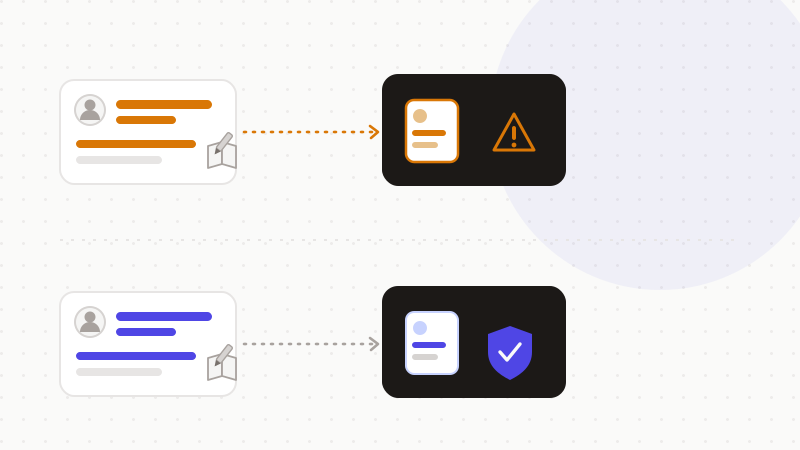
- 1Repérez les détails d'élèves : noms, écoles, classes, contacts des parents.
- 2Remplacez noms et écoles par des jetons réversibles, côté navigateur.
- 3Gardez tout diagnostic ou note de besoins particuliers hors du prompt.
- 4N'envoyez que le texte anonymisé à l'IA.
- 5Restaurez les vrais noms en local quand vous utilisez la réponse.
C'est la raison d'être d'ONYRI Sanitize. Le moteur détecte les données sensibles — noms d'élèves, écoles, contacts — et les remplace par des jetons réversibles avant l'envoi. La détection et le mapping restent dans votre navigateur. Seul un texte anonymisé atteint le modèle. L'IA ne voit que des jetons, jamais les enfants que vous accompagnez. Vous gardez l'aide, et la confiance des familles qui comptent sur vous.
Questions fréquentes
- Peut-on utiliser l'IA pour le tutorat sans risque ?
- Oui pour le travail pédagogique, non avec les détails d'élèves. L'IA peut préparer des cours, créer des fiches et rédiger des bilans sur un texte anonymisé. Mais ne collez jamais le nom, l'école ou le diagnostic d'un enfant dans une IA grand public. La plupart des élèves sont mineurs, et les données d'enfants sont plus protégées. Un diagnostic est une donnée de santé sensible au titre de l'article 9 du RGPD. Anonymisez d'abord noms et écoles, et gardez les diagnostics hors du prompt.
- Puis-je coller le nom ou le diagnostic d'un élève dans ChatGPT ?
- Mieux vaut éviter. Un nom, plus l'école, plus la classe identifie un enfant précis, et les données d'enfants sont protégées par COPPA et le Children's Code britannique. Un diagnostic comme la dyslexie ou le TDAH est une donnée de santé sensible au titre de l'article 9 du RGPD. Remplacez noms et écoles par des jetons, et ne collez jamais un diagnostic lié à un nom.
- L'IA peut-elle m'aider à préparer des cours sans données d'élèves ?
- Oui. L'IA peut créer une fiche, préparer un cours ou rédiger un bilan à partir d'un texte anonymisé. Remplacez d'abord le vrai nom et l'école de l'élève par des marqueurs neutres. L'IA travaille sur la forme de la tâche, jamais sur l'identité de l'enfant.
Sources et références
- Complying with COPPA : Frequently Asked Questions (consentement parental pour les moins de 13 ans ; ce qui constitue une information personnelle d'enfant) — US Federal Trade Commission (FTC)
- Introduction to the Children's Code (protections pour les moins de 18 ans ; intérêt supérieur de l'enfant ; minimisation des données par défaut) — UK Information Commissioner's Office (ICO)
- What is special category data? (données de santé au titre de l'article 9 ; interdiction générale et garanties renforcées) — UK Information Commissioner's Office (ICO)
Gardez vos données sensibles dans votre navigateur
ONYRI Sanitize détecte et masque vos données sensibles avant l'envoi à l'IA, puis restaure la réponse — du nom à la clé API.
Anonymiser mon prompt