Anonymize health data before handing it to AI
Health data is a GDPR special category. How to anonymize a clinical note or a patient letter before ChatGPT, Claude or Gemini.
Health data is a “special category” under the GDPR: its processing is strictly framed, and pasting a clinical note into a consumer assistant means disclosing it to a third party. Before asking AI to rephrase a letter or summarize a file, replace the patient's identity, contact details, social-security number and identifying clinical elements with tokens. The model handles the text; no patient data leaves the browser.
Why health data isn't data like any other
The GDPR prohibits processing health data as a matter of principle, save for framed exceptions (care, explicit consent…). In the United States, the HIPAA “Safe Harbor” standard points the same way: it lists eighteen identifiers to remove for a record to count as de-identified. The shared message: before any external processing, strip what ties the information to a person.
- Direct identity: name, date of birth, address, social-security number.
- Care identifiers: file, insurance and admission numbers.
- Rare clinical elements that, alone, can re-identify (uncommon condition, precise dates).
- Contact details of the patient and their relatives.
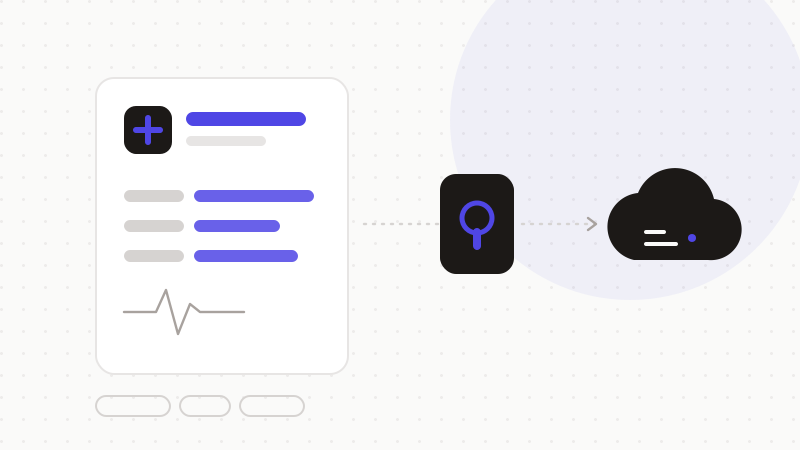
What to remove before any prompt
- 1The patient's identity and that of third parties (relatives, other patients named).
- 2All administrative identifiers: social-security, file, insurance numbers.
- 3Contact details: address, phone, email.
- 4Precise dates and locations that, combined with context, re-identify.
A flow that preserves medical confidentiality
- 1Detection: the engine spots identity, care identifiers and identifying elements.
- 2Tokenization: each element becomes a neutral token, kept in local memory.
- 3Sending: only the anonymized text goes to the AI — health data doesn't transit.
- 4Restoration: the answer is de-tokenized in your browser, tied to the right file.
ONYRI Sanitize detects a file's identifying data — identity, social-security number, contact details, medical elements — and restores the answer in your browser. Care teams gain AI's help to rephrase or summarize, without ever exposing a patient or breaking medical confidentiality.
Frequently asked questions
- Can I use ChatGPT to draft a medical letter?
- Yes, provided no identifying data is sent. Anonymize the patient's identity, identifiers and contact details before sending: AI works on the clinical content, and you restore the answer in the browser. Final validation remains the health professional's responsibility.
- Is removing the patient's name enough?
- No. Re-identification can come from a combination: date of birth, postal code, rare condition, admission dates. That's the point of an engine that detects all identifiers, including administrative numbers, rather than a partial manual deletion.
- Does medical confidentiality apply to AI tools?
- Yes. Confidentiality doesn't depend on the channel: handing identifying health data to a third-party assistant is a disclosure. Anonymizing before sending is the most direct measure to stay on the right side.
Sources & references
Keep your sensitive data in your browser
ONYRI Sanitize detects and masks your sensitive data before it reaches the AI, then restores the answer — from names to API keys.