Kann man die KI ohne Risiko um Rechtsberatung bitten?
Nur mit Vorsicht: KI erfindet mitunter falsche Rechtsprechung und bietet keinen Schutz durch das Anwaltsgeheimnis — Ihre Chats bleiben vor Gericht verwertbar. Die beiden Risiken und wie Sie sie begrenzen.
ChatGPT, Claude oder Gemini für Rechtsberatung zu nutzen ist nicht „sicher“ in dem Sinne, wie ein Laie es versteht. Zwei getrennte Risiken summieren sich. Erstens die Zuverlässigkeit: Ein universeller Chatbot kann Recht erfinden — Entscheidungen, Aktenzeichen und Zitate, die nicht existieren. Zweitens die Vertraulichkeit: Es gibt kein Anwaltsgeheimnis, wenn Sie Ihr Problem einem Verbraucher-Chatbot schildern; was Sie sagen, kann gespeichert, ausgewertet und sogar vor Gericht herausverlangt werden. KI kann helfen, eine allgemeine Frage grob zu umreißen, aber sie ersetzt keinen Anwalt und begründet kein Geheimnis. Die einzige sichere Abhilfe: Anonymisieren Sie die Fakten und Identitäten, bevor Sie Ihre Situation schildern.
Risiko Nr. 1: Die KI kann Recht erfinden
Ein Sprachmodell erzeugt plausiblen Text, keine geprüfte Wahrheit. Im rechtlichen Bereich zeigt sich das als „Halluzinationen“: Gerichtsentscheidungen, Aktenzeichen und Fallauszüge, die vollständig erfunden sind und mit voller Überzeugung präsentiert werden. Das Lehrbuchbeispiel ist der Fall Mata v. Avianca, Inc. vor dem Bundesgericht des Southern District of New York: Ein Anwalt reichte einen Schriftsatz ein, der sich auf sechs nicht existierende, von ChatGPT generierte Entscheidungen stützte — darunter Urteile, die realen Fluggesellschaften zugeschrieben wurden, aber nie ergangen sind.
Das aufschlussreichste Detail: Bevor er den Schriftsatz einreichte, fragte der Anwalt den Chatbot, ob diese Fälle „echt“ seien — und das Tool versicherte, sie existierten tatsächlich. Am 22. Juni 2023 verhängte der Richter gegen beide Anwälte und ihre Kanzlei eine Geldbuße und befand, dass sie ihre Prüfungspflicht verletzt hatten. Wenn schon Rechtsprofis hereinfallen, hat ein juristischer Laie erst recht keine Möglichkeit, das erfundene Zitat zu erkennen.
Risiko Nr. 2: kein Anwaltsgeheimnis mit einem Chatbot
Wenn Sie mit einem Anwalt sprechen, sind Ihre Gespräche durch das Anwaltsgeheimnis geschützt: Sie können nicht gegen Sie verwendet werden. Nichts dergleichen gibt es bei einem Verbraucher-Chatbot. Sam Altman, der CEO von OpenAI, hat das im Juli 2025 öffentlich eingeräumt: Bei einem Therapeuten, einem Anwalt oder einem Arzt gibt es ein gesetzlich geschütztes Geheimnis, aber „das haben wir noch nicht gelöst“ für Gespräche mit ChatGPT. Nach seinen Worten könnte OpenAI im Fall eines Prozesses gesetzlich gezwungen werden, diese Gespräche vorzulegen — es gibt „keine gesetzliche Vertraulichkeit“ für die Konversationen der Nutzer.
Ein Bundesgericht hat das in der Praxis bestätigt. Im Fall United States v. Heppner (Southern District of New York, Entscheidung vom 10. Februar 2026) urteilte der Richter: Dokumente aus einem Gespräch mit einer KI — hier ein Prozessbeteiligter, der die Verbraucherversion von Claude für juristische Recherchen nutzte — sind weder durch das Anwaltsgeheimnis gedeckt noch als anwaltliche Arbeitsvorbereitung geschützt. Die Begründung ist eindeutig: Ein KI-Tool ist kein Anwalt. Es hat keine Zulassung, schuldet keine Loyalitätspflicht, begründet kein Mandatsverhältnis und unterliegt keinen Berufsregeln.
Schlimmer noch: Die Datenschutzrichtlinien dieser Plattformen erlauben die Erhebung der Daten, ihre Nutzung zum Training der Modelle und die Weitergabe an Behörden. Es gibt daher keine „berechtigte Erwartung der Vertraulichkeit“. Und Ihr Gespräch nachträglich an einen Anwalt weiterzuleiten macht es nicht vertraulich — ein Dokument, das zum Zeitpunkt seiner Erstellung nicht geschützt war, kann es nicht rückwirkend werden.
| Sie nehmen an | Die Realität |
|---|---|
| „Die KI zitiert echtes Recht“ | Sie kann Entscheidungen, Aktenzeichen und Zitate erfinden |
| „Das ist vertraulich, wie bei einem Anwalt“ | Kein Anwaltsgeheimnis mit einem Verbraucher-Chatbot |
| „Meine Gespräche bleiben privat“ | Gespeichert, potenziell ausgewertet und vor Gericht verwertbar |
| „Ich leite es später an meinen Anwalt weiter“ | Nachträgliches Weiterleiten macht das Gespräch nicht geheimnisgeschützt |
Was vor Gericht herausverlangt werden kann
Konkret ist Rechtsberatung durch einen Verbraucher-Chatbot „discoverable“, also im Beweisverfahren herausverlangbar: Bei einem Rechtsstreit können die Protokolle mit Ihren Prompts und den Antworten des Modells von der Gegenseite verlangt werden, sofern sie nicht geschützt, relevant und dem Fall angemessen sind. Was Sie schildern — ein Vertrag, ein Streit, persönliche Fakten — wird zu einem potenziell einforderbaren Beweisstück. Die Empfehlung der Juristen für sensible Themen ist eindeutig:
- Meiden Sie Verbraucher-KI-Tools, um über eine wirklich sensible Angelegenheit zu sprechen.
- Führen Sie das vertrauliche Gespräch mit einem echten Anwalt — dem Einzigen, der das Anwaltsgeheimnis bietet.
- Teilen Sie niemals eine bereits geschützte Kommunikation mit einer Drittplattform: Das kann den ursprünglichen Schutz aufheben.
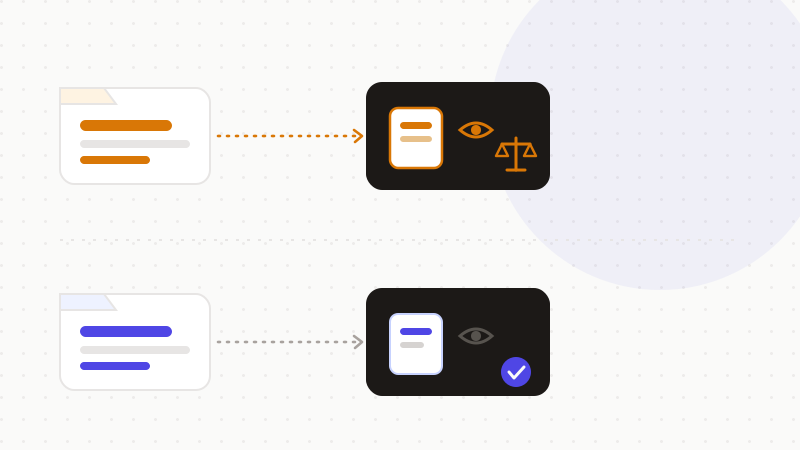
Die Abhilfe: anonymisieren, bevor Sie Ihre Situation schildern
Beide Risiken lösen sich am selben Ort: im Inhalt Ihres Prompts. Eine KI kann durchaus helfen, einen Rechtsbegriff zu verstehen, die richtigen Fragen vorzubereiten oder eine allgemeine Situation grob zu umreißen — sofern Sie keine identifizierbaren Daten hineingeben. Bevor Sie Ihren Fall schildern, entfernen Sie, was Sie exponiert:
- 1Ersetzen Sie Namen, Adressen und Kontaktdaten durch neutrale Token.
- 2Maskieren Sie die Angaben, die die Sache mit Ihnen verknüpfen: Vertrags-, Akten- und Kontonummern.
- 3Neutralisieren Sie präzise Beträge und Daten, die die Fakten erkennbar machen.
- 4Formulieren Sie Ihre Frage allgemein und überprüfen Sie jede zitierte Rechtsquelle anhand einer offiziellen Quelle oder eines Anwalts.
Bleiben Sie ehrlich über die Grenze: Ist die Frage einmal grob umrissen, führt echte Beratung — verbindlich, vertraulich, durchsetzbar — über einen Anwalt. Die KI bereitet den Boden, sie ersetzt ihn nicht.
Genau dafür ist ONYRI Sanitize da: Die Engine erkennt Namen, Adressen, Aktennummern und Beträge und ersetzt sie vor dem Senden durch umkehrbare Token. Die Erkennung und die Zuordnung Token↔Wert bleiben in Ihrem Browser; nur ein anonymisierter Text erreicht die KI. Ob das Gespräch gespeichert, ausgewertet oder vor Gericht verlangt wird — es enthält nur Token, nicht Ihre echte Akte.
Häufig gestellte Fragen
- Kann man ChatGPT ohne Risiko für Rechtsberatung nutzen?
- Nur mit Vorsicht. ChatGPT kann falsche Rechtsprechung erfinden und als echt präsentieren und bietet kein Anwaltsgeheimnis: Ihre Gespräche können gespeichert, ausgewertet und vor Gericht herausverlangt werden. KI kann eine allgemeine Frage grob umreißen, ersetzt aber keinen Anwalt. Anonymisieren Sie die Fakten und Identitäten, bevor Sie Ihre Situation schildern.
- Sind meine rechtlichen Gespräche mit einer KI vertraulich?
- Nein. Es gibt kein Anwaltsgeheimnis mit einem Verbraucher-Chatbot. Ein Bundesgericht (US v. Heppner, 2026) urteilte, dass solche Gespräche weder durch das Anwaltsgeheimnis gedeckt noch als Arbeitsvorbereitung geschützt sind, und der CEO von OpenAI bestätigte, dass sie in einem Prozess vorgelegt werden könnten.
- Wie stelle ich einer KI eine Rechtsfrage, ohne mich zu exponieren?
- Anonymisieren Sie zuerst: Ersetzen Sie Namen, Adressen, Vertragsnummern und Beträge durch neutrale Token, formulieren Sie die Frage allgemein und überprüfen Sie dann jede zitierte Quelle anhand einer offiziellen Quelle oder eines Anwalts. Eine Anonymisierungs-Engine tauscht die sensiblen Daten gegen ein umkehrbares Token, und die KI erhält nie die echte Information.
Quellen & Referenzen
- Sam Altman warnt, dass es keine gesetzliche Vertraulichkeit gibt, wenn man ChatGPT als Therapeuten nutzt — TechCrunch
- SDNY-Entscheidung (US v. Heppner): Gespräche mit einer KI sind nicht geheimnisgeschützt — Jones Walker LLP
- KI-Tools, Rechtsberatung und die Grenzen des Anwaltsgeheimnisses — Williams Mullen
Behalten Sie Ihre sensiblen Daten in Ihrem Browser
ONYRI Sanitize erkennt und maskiert Ihre sensiblen Daten, bevor sie die KI erreichen, und stellt anschließend die Antwort wieder her — vom Namen bis zum API-Schlüssel.