Können anonymisierte Daten re-identifiziert werden?
Ja, oft: Naives Maskieren lässt Quasi-Identifikatoren (Postleitzahl, Geburtsdatum, Geschlecht) übrig, die sich verknüpfen lassen, um die Person zu re-identifizieren. Hier ist, warum und wie.
Ja — schlecht „anonymisierte“ Daten werden oft re-identifiziert. Das Löschen direkter Identifikatoren (Name, Adresse, Sozialversicherungsnummer) reicht nicht: Quasi-Identifikatoren wie Postleitzahl, Geburtsdatum oder Geschlecht bleiben erhalten, und sobald sie mit anderen öffentlichen Datensätzen verknüpft werden, ermöglichen sie es, die Person zu finden. Wissenschaftliche Arbeiten belegen dies seit den 1990er-Jahren, und die DSGVO zieht daraus eine klare Schlussfolgerung: Daten, die lediglich maskiert sind, bleiben personenbezogene Daten. Nur eine unwiderrufliche Anonymisierung — oder die Daten überhaupt nie preiszugeben — beseitigt das Risiko.
Warum naives Maskieren scheitert
Das Entfernen von Name und Adresse vermittelt ein falsches Sicherheitsgefühl. Das Problem sind die Quasi-Identifikatoren: Attribute, die einzeln betrachtet harmlos wirken, aber einzigartig werden, sobald man sie kombiniert. Latanya Sweeney (Data Privacy Lab / Identifiability Project, Carnegie Mellon University) hat es anhand der US-Volkszählungsdaten von 1990 beziffert: Rund 87 % der Bevölkerung waren wahrscheinlich eindeutig identifizierbar allein anhand des Tripels fünfstellige Postleitzahl + Geschlecht + vollständiges Geburtsdatum. Bei gröberer Körnung — Ort statt Postleitzahl — waren immer noch etwa 53 % eindeutig identifizierbar. Der Name wird nie benötigt: Verknüpfen genügt.
Eine 2019 in Nature Communications veröffentlichte Studie trieb den Befund weiter: Mithilfe eines generativen Modells schätzen ihre Autoren, dass 99,98 % der Amerikaner in jedem „anonymisierten“ Datensatz allein anhand von 15 demografischen Attributen (Alter, Geschlecht, Familienstand usw.) korrekt re-identifiziert würden. Ihr Fazit ist unverblümt: Selbst stark gesampelte Datensätze dürften kaum den Anonymisierungsstandard der DSGVO erfüllen. Das Imperial College London fasste es in einer Mitteilung so zusammen: Personenbezogene Daten zu anonymisieren „reicht nicht aus, um die Privatsphäre zu schützen“.
Drei wegweisende Demonstrationen
Die Geschichte der Re-Identifizierung wird anhand einiger Fälle geschrieben, die zu Klassikern geworden sind:
- 1Die Krankenakte von Gouverneur Weld (Massachusetts, 1997). Eine Versicherungskommission hatte Krankenhausakten von Staatsangestellten veröffentlicht, die als „anonymisiert“ angepriesen wurden (Namen, Adressen und Sozialversicherungsnummern entfernt). Latanya Sweeney kaufte für etwa 20 $ die öffentliche Wählerliste von Massachusetts — sie enthält Name, Adresse, Postleitzahl und Geburtsdatum — und verknüpfte die beiden Datensätze: In Cambridge teilten nur sehr wenige Personen das Geburtsdatum des Gouverneurs, noch weniger sein Geschlecht und nur eine seine Postleitzahl. Seine Krankenakte war gefunden. Die Demonstration prägte unmittelbar die De-Identifizierungsregeln der HIPAA Privacy Rule (2003).
- 2Der Netflix Prize (Narayanan & Shmatikov, 2008 IEEE Symposium on Security and Privacy). Der veröffentlichte Datensatz enthielt „anonyme“ Filmbewertungen von rund 500.000 Abonnenten. Unter Verwendung der Internet Movie Database (IMDb) als öffentliches Zusatzwissen zeigten die Forscher, dass ein Angreifer, der nur einige Bewertungen und Daten eines Abonnenten kennt, dessen Datensatz mühelos finden — und daraus sensible Informationen wie politische Präferenzen ableiten konnte.
- 3Die Nature-Communications-Studie von 2019 (Rocher, Hendrickx, de Montjoye), oben zitiert, die den Mechanismus verallgemeinert: Es handelt sich nicht um einen isolierten Zufall, sondern um eine mathematische Eigenschaft reichhaltiger demografischer Daten.
Anonymisierung ≠ Pseudonymisierung: Was die DSGVO sagt
Das europäische Recht klärt eine häufige Verwechslung. Erwägungsgrund 26 der DSGVO stellt fest, dass die Grundsätze des Datenschutzes nicht für anonyme Informationen gelten — Daten, die sich nicht (oder nicht mehr) auf eine identifizierte oder identifizierbare Person beziehen. Echte Anonymisierung ist unwiderruflich: Die Daten fallen dann aus dem Anwendungsbereich der DSGVO heraus. Die Pseudonymisierung (Artikel 4 Absatz 5) ersetzt direkte Identifikatoren durch Codes, aber die Daten können mithilfe „zusätzlicher Informationen“, die gesondert aufbewahrt werden — ein Schlüssel, eine Zuordnungstabelle —, wieder zugeordnet werden. Pseudonymisierte Daten bleiben daher personenbezogene Daten, die der DSGVO unterliegen. Die britische Aufsichtsbehörde (ICO) sagt es unmissverständlich: Pseudonymisierung ist eine Sicherheitsmaßnahme, keine Methode der Anonymisierung. Wir erläutern diese Definitionen in unserem Artikel „Anonymisierung, Pseudonymisierung, Tokenisierung: Was ist der Unterschied?“
Woran erkennen Sie, ob eine „Anonymisierung“ standhält? Die Artikel-29-Datenschutzgruppe (Opinion 05/2014 on Anonymisation Techniques) legt drei Tests fest, die eine wirksame Anonymisierung vereiteln muss — und genau das durchbrechen die obigen Demonstrationen:
| Test (Art. 29 WP) | Frage, die Sie sich stellen sollten | Warnsignal |
|---|---|---|
| Singling out (Individualisierung) | Können Sie einen Datensatz isolieren, der einer einzelnen Person entspricht? | Das Tripel Postleitzahl + Geschlecht + Geburtsdatum genügt (Fall Weld) |
| Linkability (Verknüpfbarkeit) | Können Sie zwei Datensätze derselben Person miteinander verknüpfen? | Abgleich mit IMDb oder einer öffentlichen Wählerliste |
| Inferenz | Können Sie eine Information über die Person ableiten? | Politische Präferenzen, abgeleitet aus dem Netflix Prize |
Der Fall der clientseitigen Tokenisierung
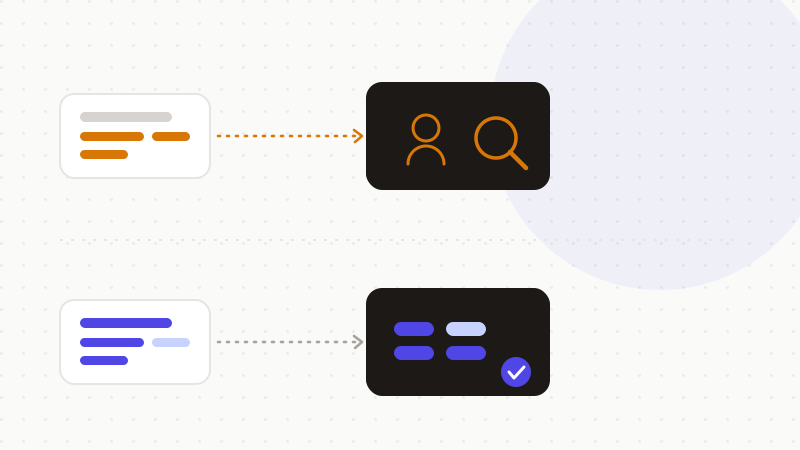
Die Tokenisierung von ONYRI ist umkehrbar — im Sinne der DSGVO ist sie also eine Pseudonymisierung, keine Anonymisierung. Der entscheidende Unterschied liegt in einem Detail: Die Zuordnungstabelle Token ↔ Wert (eben jene „zusätzlichen Informationen“, die eine Wiederzuordnung möglich machen) verlässt niemals Ihren Browser. Der KI-Anbieter (ChatGPT, Claude, Gemini…) erhält nur Token, denen die verwertbaren Quasi-Identifikatoren fehlen, und ohne den Schlüssel, der zum Abgleich nötig wäre. Er hat also nichts zu korrelieren: keinen Namen, kein Tripel aus Postleitzahl/Geburtsdatum/Geschlecht, nichts, was sich mit einem Zusatzdatensatz verknüpfen ließe. Die Detokenisierung erfolgt clientseitig, sobald die Antwort des Modells zurückkommt. Die drei Artikel-29-Tests — Singling out, Verknüpfbarkeit, Inferenz — scheitern auf Seiten des Anbieters, weil es nichts zum Abgleichen gibt. Um diesen Ansatz unter den verwandten Techniken einzuordnen, siehe „Anonymisierung, Pseudonymisierung, Tokenisierung: Was ist der Unterschied?“
- Das Re-Identifizierungsrisiko geht von den im Klartext belassenen Quasi-Identifikatoren aus, nicht nur vom Namen.
- Daten, die lediglich maskiert sind, bleiben personenbezogene Daten im Sinne der DSGVO.
- Das Verknüpfen an der Quelle zu neutralisieren — die Daten aus dem Prompt zu entfernen — ist die robusteste Maßnahme.
Genau dafür ist ONYRI Sanitize da: Die Engine ersetzt sensible Daten vor dem Senden durch umkehrbare Token, und nur anonymisierter Text erreicht das Modell; sowohl die Erkennung als auch die Tabelle Token ↔ Wert bleiben in Ihrem Browser. Der Anbieter erhält keinen Quasi-Identifikator zum Abgleichen — es gibt also nichts, was auf seiner Seite re-identifiziert werden könnte, gleich welchen Zusatzdatensatz ein Dritter besitzen mag.
Häufig gestellte Fragen
- Können anonymisierte Daten re-identifiziert werden?
- Ja, oft, wenn die „Anonymisierung“ sich darauf beschränkt, direkte Identifikatoren zu löschen. Es bleiben Quasi-Identifikatoren (Postleitzahl, Geburtsdatum, Geschlecht…), die, mit anderen Datensätzen verknüpft, jemandem erlauben, die Person zu finden. Latanya Sweeney schätzte, dass rund 87 % der Amerikaner allein anhand des Tripels Postleitzahl + Geschlecht + Geburtsdatum identifizierbar waren. Nur eine unwiderrufliche Anonymisierung führt die Daten aus dem Anwendungsbereich der DSGVO heraus.
- Was ist der Unterschied zwischen Anonymisierung und Pseudonymisierung?
- Die Anonymisierung ist unwiderruflich: Die Daten können keiner Person mehr zugeordnet werden, und die DSGVO gilt nicht mehr (Erwägungsgrund 26). Die Pseudonymisierung (Artikel 4 Absatz 5) ersetzt Identifikatoren durch Codes, aber ein gesondert aufbewahrter Schlüssel erlaubt die Wiederzuordnung; sie bleibt daher personenbezogene Daten, die der DSGVO unterliegen. Laut ICO ist sie eine Sicherheitsmaßnahme, keine Methode der Anonymisierung.
- Schützt die Tokenisierung wirklich vor dem Re-Identifizierungsrisiko?
- Die Tokenisierung ist technisch eine Pseudonymisierung (umkehrbar). Bei ONYRI verlässt die Tabelle Token ↔ Wert niemals Ihren Browser: Der KI-Anbieter erhält nur Token, ohne Quasi-Identifikatoren und ohne Abgleichsschlüssel. Er hat also nichts, was er mit einem Zusatzdatensatz korrelieren könnte, was die drei Re-Identifizierungstests (Singling out, Verknüpfbarkeit, Inferenz) auf Seiten des Anbieters neutralisiert.
Quellen & Referenzen
- Estimating the success of re-identifications in incomplete datasets using generative models (Studie von 2019: 99,98 % der Amerikaner mit 15 Attributen re-identifizierbar) — Nature Communications
- Pseudonymisation guidance — Unterscheidung zwischen Pseudonymisierung und Anonymisierung sowie Status als personenbezogene Daten unter der DSGVO — Information Commissioner's Office (ICO, UK regulator)
- How To Break Anonymity of the Netflix Prize Dataset — De-Anonymisierung durch Abgleich mit IMDb (Narayanan & Shmatikov) — arXiv (Cornell University)
Behalten Sie Ihre sensiblen Daten in Ihrem Browser
ONYRI Sanitize erkennt und maskiert Ihre sensiblen Daten, bevor sie die KI erreichen, und stellt anschließend die Antwort wieder her — vom Namen bis zum API-Schlüssel.