Datenschutz und KI: Der komplette Leitfaden zum Schutz Ihrer Daten
Datenschutz und KI: Sie kontrollieren nicht, was ein Anbieter mit Ihren Daten macht, aber Sie kontrollieren, was Sie ihm senden. Der komplette Leitfaden, Risiko für Risiko, mit der Lösung, die hält.
Datenschutz und KI lässt sich in einem Satz zusammenfassen: Sie kontrollieren nicht, was ein Anbieter (OpenAI, Anthropic, Google, Meta) mit Ihren Daten macht, aber Sie kontrollieren, was Sie ihm senden. Standardmäßig trainieren mehrere Verbraucherdienste ihre Modelle mit Ihren Gesprächen, speichern sie lange und können sie von Menschen lesen lassen; Opt-out-Einstellungen helfen, decken aber nie alles ab. Der einzige robuste Schutz, der für jedes Tool gilt, besteht also darin, sensible Informationen zu minimieren und zu anonymisieren, bevor Sie sie in einen Prompt einfügen. Die CNIL empfiehlt genau das: Teilen Sie keine vertraulichen Informationen in einem KI-Verbraucherdienst. Dieser Leitfaden gibt einen vollständigen Überblick — was mit Ihren Daten geschieht, die Risiken, die Schutzmaßnahmen und das Vorgehen je nach Profil.
Was KI standardmäßig mit Ihren Daten macht
Auf Verbraucherkonten koexistieren häufig drei Verarbeitungen standardmäßig, sofern Sie sich nicht ausdrücklich abmelden. Erstens das Training: Ihre Gespräche werden zur Verbesserung der Modelle genutzt. Am 28. August 2025 änderte Anthropic seine Verbraucherbedingungen (Claude Free, Pro, Max und Claude Code), um Chats und Coding-Sitzungen für das Training zu verwenden, sofern der Nutzer nicht widerspricht, mit einer Entscheidung, die vor dem 28. September 2025 zu treffen war. Zweitens die Speicherung: Gemäß derselben Änderung verlängert sich die Aufbewahrung auf fünf Jahre für alle, die sich nicht abmelden, während Prompts und Antworten zuvor in der Regel innerhalb von 30 Tagen gelöscht wurden; Unternehmensangebote (Claude for Work, for Education, Gov, API) sind nicht betroffen. Drittens die menschliche Überprüfung: Gemeldete Gespräche (Missbrauch, illegale Inhalte, Schadensrisiko) können an menschliche Prüfer eskaliert werden — OpenAI gibt an, Gespräche zu analysieren, um eine Bedrohung durch unmittelbar bevorstehenden körperlichen Schaden zu erkennen, die an Prüfer und gegebenenfalls an die Strafverfolgungsbehörden weitergeleitet werden kann. Wir erläutern jeden dieser Punkte in unseren Artikeln „Trainieren KIs mit Ihren Daten?“ und „Welche personenbezogenen Daten sammelt ChatGPT über Sie?“.
Die echten Risiken: Lecks, Indexierung, Justiz, DSGVO
Über die Einstellungen hinaus sind vier konkrete Risiken dokumentiert. Das Teilen von Gesprächen kann zu einer öffentlichen Exposition führen: 2025 landeten über eine Option „auffindbar machen“ geteilte ChatGPT-Gespräche in Suchmaschinen wie Google indexiert; einige enthielten Namen, Lebensläufe und Details, die eine Identifizierung über LinkedIn ermöglichten. Nach diesen Meldungen entfernte OpenAI die Funktion; ein Sprecher erklärte, sie habe „zu viele Gelegenheiten geschaffen, versehentlich Dinge zu teilen, die man nicht teilen wollte“. Von Ihnen eingegebene Inhalte können auch zu vor Gericht vorlegbaren Beweismitteln werden: Im Verfahren New York Times gegen OpenAI zwang eine Entscheidung vom Mai 2025 OpenAI, Protokolle von ChatGPT-Gesprächen aufzubewahren — einschließlich jener, die Nutzer gelöscht hatten — und im November 2025 ordnete das Gericht die Vorlage von 20 Millionen de-identifizierten Protokollen an (siehe OpenAIs Mitteilung „response to NYT data demands“).
- Lecks durch Mitarbeiter: Im April 2023 fügten Samsung-Ingenieure mehrfach in weniger als 20 Tagen proprietären Halbleiter-Quellcode und vertrauliche interne Besprechungsnotizen in ChatGPT ein; Samsung beschränkte daraufhin die Nutzung generativer KI durch seine Mitarbeiter.
- Indexierte geteilte Chats: Eine „auffindbare“ Freigabe kann ein Gespräch samt der darin enthaltenen Daten in einer Suchmaschine sichtbar machen.
- Vorlage vor Gericht: Eine gesetzliche Verpflichtung kann Daten einfrieren, die eigentlich gelöscht sein sollten, und deren Vorlage erzwingen.
- DSGVO-Verstoß: Das Senden personenbezogener Daten an ein Verbraucher-Tool kann gegen Ihre Pflichten verstoßen, insbesondere ohne Rechtsgrundlage oder Rahmen für Übermittlungen außerhalb der EU.
In Bezug auf die DSGVO gilt der Rahmen häufig für die Modelle und deren Nutzung. In seiner Stellungnahme 28/2024 (angenommen am 17. Dezember 2024) vertritt der Europäische Datenschutzausschuss (EDPB) die Auffassung, dass die Anonymität eines mit personenbezogenen Daten trainierten Modells im Einzelfall zu beurteilen ist — ein solches Modell kann nicht immer als anonym gelten — und legt die Bedingungen für die Berufung auf das berechtigte Interesse anhand einer dreistufigen Prüfung dar. Die CNIL ihrerseits betont, dass personenbezogene Daten in den Trainingsdatensätzen, in den Modellen, die sie möglicherweise gespeichert haben, und in den Prompts geschützt werden müssen. Wir vertiefen diesen Aspekt in „DSGVO und generative KI: Konformität“.
Die Schutzmaßnahmen: Einstellungen, Unternehmensangebote, Anonymisierung
Schutzmaßnahmen aufseiten des Anbieters existieren, sind aber begrenzt. Datenschutzeinstellungen und das Training-Opt-out müssen manuell aktiviert werden (mitunter auf „Ein“ voreingestellt), temporäre Chats verringern die Persistenz, und Unternehmensangebote werden von einem Auftragsverarbeitungsvertrag (AVV) begleitet. Die CNIL empfiehlt Organisationen, die Wiederverwendung der Nutzungsdaten durch den Anbieter zu deaktivieren, einen AVV zu unterzeichnen, der die Zugriffsgrenzen festlegt, das Fehlen von Training und die Konformität der Übermittlungen außerhalb der EU zu überprüfen und für sensible Daten sogar On-Premise-Lösungen zu nutzen. Doch keine dieser Einstellungen macht rückgängig, was ein Modell bereits gespeist hat, noch verhindert sie eine Vorlage vor Gericht. Deshalb liegt die robusteste Maßnahme im Vorfeld, beim Inhalt: sensible Daten vor dem Senden entfernen. Unser Leitfaden „Wie Sie Ihre Daten anonymisieren, bevor Sie eine KI nutzen“ beschreibt die Methode, und „Welcher KI-Chatbot schützt die Privatsphäre am besten?“ zeigt, warum die Einstellung wichtiger ist als die Marke.
| Schutzmaßnahme | Was sie abdeckt | Ihre Grenze |
|---|---|---|
| Training-Opt-out | Stoppt die künftige Nutzung Ihrer Chats für das Training | Entfernt nicht, was ein Modell bereits gespeist hat (nur zukunftsgerichtet) |
| Temporäre Chats / Löschung | Verringert die Persistenz Ihres Verlaufs | Restaufbewahrung (Missbrauchsüberwachung) und gerichtliche Sicherung bleiben möglich |
| Unternehmenstarif + AVV | Schließt Training standardmäßig aus, regelt den Zugriff | Nur bei ausgehandelten Verträgen; Gerichtsbarkeit des Anbieters unverändert |
| Anonymisierung vor dem Senden | Sensible Daten verlassen nie Ihr Gerät — deckt jedes Tool ab | Erfordert das Erkennen und Maskieren der sensiblen Teile vor dem Einfügen |
Das Vorgehen je nach Profil
Die Bedürfnisse variieren. Eine Privatperson sollte es vermeiden, medizinische oder finanzielle Daten oder Ausweisdokumente in ein Verbraucher-Tool einzugeben. Ein Team oder Unternehmen muss Lecks von Code, Verträgen, Kundendaten und Besprechungsnotizen verhindern — der Fall Samsung zeigt, dass die vorgelagerte Anonymisierung auch Geschäftsgeheimnisse schützt. Sensible Branchen (Gesundheit, Finanzen, Recht) unterliegen verschärften Pflichten (DSGVO, Berufsgeheimnis, Schutz von Geschäftsgeheimnissen), die die Anonymisierung umso notwendiger machen; die CNIL empfiehlt interne Richtlinien, die erlaubte und verbotene Nutzungen festlegen, Datenschutz-Folgenabschätzungen (DSFA) und die Ernennung eines DSB.
- 1Privatperson: Fügen Sie niemals eine Sozialversicherungsnummer, Bankverbindung oder medizinische Ergebnisse ein; melden Sie sich vom Training ab; anonymisieren Sie alles Übrige vor dem Senden.
- 2Team / Unternehmen: Verbieten Sie das Einfügen von Quellcode, Verträgen und Kundendaten im Klartext; regeln Sie die erlaubten Nutzungen; anonymisieren Sie, was dennoch von einer KI verarbeitet werden muss.
- 3Sensible Branche (Gesundheit / Finanzen / Recht): Kombinieren Sie einen Unternehmenstarif + AVV, DSFA und DSB sowie eine systematische Anonymisierung — das ist die einzige Maßnahme, die unabhängig vom Tool hält.
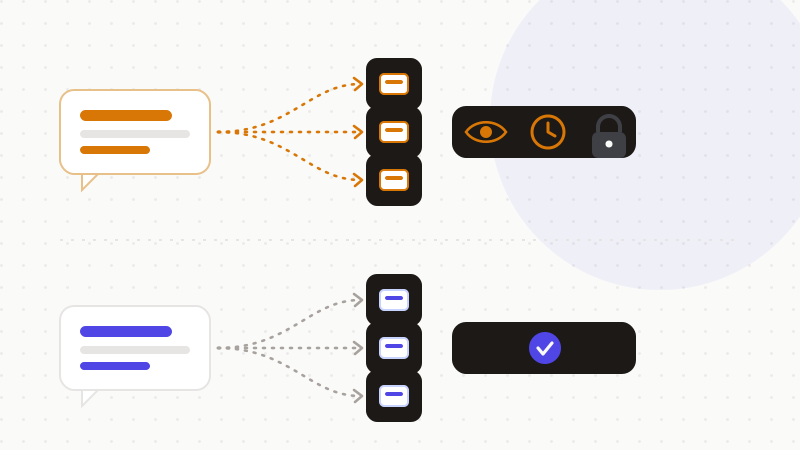
Genau dafür ist ONYRI Sanitize da: Da Sie nicht kontrollieren können, was der Anbieter mit Ihren Daten macht, besteht der verbleibende Hebel darin, ihm niemals die sensiblen Teile anzuvertrauen. Die Engine erkennt sensible Daten — vom Namen bis zum API-Schlüssel — und ersetzt sie durch umkehrbare Token; die Erkennung und die Zuordnung Token↔Wert bleiben in Ihrem Browser, und nur anonymisierter Text erreicht das Tool. Ob das Gespräch zum Training genutzt, fünf Jahre gespeichert, von einem Menschen überprüft oder vor Gericht vorgelegt wird — es enthält nur Token, nicht Ihre echten Informationen.
Häufig gestellte Fragen
- Wie schützen Sie Ihre Privatsphäre bei der KI?
- Gehen Sie von dem Grundsatz aus, dass Sie nicht kontrollieren, was ein Anbieter mit Ihren Daten macht, wohl aber, was Sie ihm senden. Melden Sie sich vom Training ab und nutzen Sie temporäre Chats, aber fügen Sie vor allem niemals sensible Daten im Klartext ein: Minimieren und anonymisieren Sie Informationen vor dem Senden. Die CNIL empfiehlt ausdrücklich, keine vertraulichen Informationen in einem KI-Verbraucherdienst zu teilen.
- Sind KIs wie ChatGPT, Claude oder Gemini für vertrauliche Daten sicher?
- Nicht standardmäßig auf Verbraucherkonten: Sie trainieren oft mit Ihren Chats, sofern Sie sich nicht abmelden, speichern sie lange (bis zu 5 Jahre bei Anthropic für alle, die sich nicht abmelden) und können sie von Menschen lesen lassen. Unternehmenstarife mit einem AVV verbessern die Lage, aber für wirklich vertrauliche Daten bleibt die sicherste Maßnahme, sie vor dem Senden zu anonymisieren.
- Reicht ein Training-Opt-out aus, um meine Daten zu schützen?
- Nein. Das Opt-out stoppt die künftige Nutzung Ihrer Gespräche für das Training, entfernt aber nicht, was ein Modell bereits gespeist hat, und verhindert weder die mit der Missbrauchsüberwachung verbundene Aufbewahrung noch eine gelegentliche menschliche Überprüfung oder eine gerichtliche Sicherung der Daten. Es verringert die Exposition; nur die Anonymisierung des Inhalts vor dem Senden ist unabhängig vom Tool und seinen Einstellungen.
Quellen & Referenzen
- Fragen und Antworten zur Nutzung eines generativen KI-Systems (keine vertraulichen Daten eingeben, Wiederverwendung durch den Anbieter prüfen, AVV, Übermittlungen außerhalb der EU) — CNIL
- Anthropic users face a new choice — opt out or share your data for AI training (Aufbewahrung auf 5 Jahre verlängert, Frist 28. September 2025, betroffene Angebote) — TechCrunch
- OpenAI does away with feature that made ChatGPT conversations discoverable by Google (geteilte Chats indexiert, Funktion entfernt) — Fortune
Behalten Sie Ihre sensiblen Daten in Ihrem Browser
ONYRI Sanitize erkennt und maskiert Ihre sensiblen Daten, bevor sie die KI erreichen, und stellt anschließend die Antwort wieder her — vom Namen bis zum API-Schlüssel.