Peut-on utiliser l'IA pour un chantier (BTP) sans risque ?
Oui pour la méthode, non avec vos données : ne collez jamais une offre chiffrée, un tarif sous-traitant ou un rapport d'accident dans une IA grand public.
La réponse courte tient en une phrase. L'IA peut aider sur la méthode, mais ne lui confiez pas vos données confidentielles. Un dossier de chantier concentre des informations très sensibles. Votre offre chiffrée. Vos marges. Les tarifs de vos sous-traitants. Les données de vos ouvriers. Les plans et accès du site. Collées dans une IA grand public, ces données partent sur les serveurs d'un tiers. Elles peuvent y être retenues, relues ou réutilisées pour l'entraînement. Un prix d'offre est un secret d'affaires : le divulguer peut lui faire perdre sa protection. Les données des salariés, elles, relèvent du RGPD. La bonne méthode existe : anonymisez avant l'envoi.
Ce qu'un dossier de chantier met à nu
Un chantier produit quatre familles de données sensibles. Chacune intéresse quelqu'un d'autre que vous.
- L'offre chiffrée : votre prix total, vos marges, votre déboursé sec.
- Les sous-traitants et fournisseurs : leurs tarifs et conditions, souvent confidentiels par contrat.
- Les ouvriers et la sécurité : accueils, droit de travailler, certifications, rapports d'incident.
- Le site : plans, accès, plannings et dispositifs de sécurité.
C'est exactement ce qu'un concurrent veut voir. Votre prix. Vos marges. Vos taux de sous-traitance. Coller un appel d'offres dans une IA grand public envoie tout cela chez un tiers.
Offre et appel d'offres : un secret d'affaires
Un secret d'affaires est une information commerciale qui a de la valeur parce qu'elle reste secrète. L'OMPI (Organisation Mondiale de la Propriété Intellectuelle) le rappelle. Contrairement à un brevet, sa protection dépend d'une seule chose : que l'information ne soit jamais divulguée.
Votre prix d'offre en est un bon exemple. Votre calcul de marge aussi. Vos tarifs de sous-traitants également. Ils ne restent protégés que tant qu'ils demeurent confidentiels. Les coller dans une IA publique, qui les envoie sur un serveur tiers, peut leur faire perdre cette protection.
En Europe, la directive sur les secrets d'affaires (2016/943) va dans le même sens. Elle fixe une définition commune du secret d'affaires. Elle protège contre son obtention, son usage ou sa divulgation illicites. Une offre, un chiffrage ou des conditions fournisseur ont donc un poids juridique — à condition de rester secrets.
Il y a une seconde couche. La plupart des appels d'offres imposent une clause de confidentialité. Vous vous engagez à ne pas divulguer le dossier ni votre prix. C'est un engagement contractuel, distinct de la loi. Le coller dans une IA peut donc rompre cet engagement.
Ouvriers et sécurité : des données personnelles
Un chantier, c'est aussi des gens. Et leurs données relèvent du RGPD (Règlement Général sur la Protection des Données). L'entreprise qui décide pourquoi et comment traiter ces données en est le « responsable de traitement ». C'est vous. À ce titre, vous répondez de la conformité.
Beaucoup de documents de chantier sont des données personnelles. Les fiches d'accueil sécurité. Les contrôles du droit de travailler. Les certifications. Les rapports d'incident ou d'accident. Ces derniers posent un cas à part.
Un rapport de blessure contient souvent des informations de santé. Le RGPD range la santé dans ses « catégories particulières » (article 9). Ces données reçoivent une protection renforcée. Leur traitement exige en général une base légale plus solide et des garanties supplémentaires.
Le RGPD impose aussi un principe de sécurité. Vous devez protéger ces données par des mesures techniques et organisationnelles appropriées. Faire passer un dossier ouvrier par une IA grand public va à l'encontre de ce principe. Pas de contrat. Pas de durée de conservation définie. Un usage possible pour l'entraînement du modèle.
Ce qu'alertent les autorités cyber
Le National Cyber Security Centre (NCSC), l'autorité cyber britannique, met en garde. Les requêtes tapées dans un chatbot public peuvent être stockées par le fournisseur. Elles peuvent servir à entraîner de futurs modèles. Elles peuvent aussi fuiter si le fournisseur est piraté.
Sa conclusion est simple. Ne saisissez pas d'informations sensibles ou confidentielles dans un LLM (grand modèle de langage) public. Le NCSC conseille aussi de lire les conditions et la politique de confidentialité avant tout usage. Les offres grand public et entreprise diffèrent beaucoup sur la rétention et l'entraînement.
| Ce que vous vous dites | La réalité |
|---|---|
| « Mon offre chiffrée n'est qu'un devis » | C'est un secret d'affaires : le divulguer peut lui faire perdre sa protection |
| « Partager un tarif sous-traitant est sans risque » | Il est souvent confidentiel par contrat — et c'est ce qu'un concurrent cherche |
| « Un rapport d'accident, c'est juste un formulaire » | Il contient des données de santé, protégées par l'article 9 du RGPD |
| « Une IA ne fera rien de mon prompt » | Le NCSC alerte : stockage, entraînement, fuite en cas de piratage |
La parade : anonymiser avant l'envoi
Bonne nouvelle : l'IA reste très utile sur un chantier. Elle peut rédiger un mode opératoire. Elle peut vérifier la logique d'un planning. Elle peut mettre en forme un courrier. Pour cela, elle n'a besoin ni de vos prix, ni des noms, ni des détails du site.
L'idée est d'anonymiser avant le prompt. Vous remplacez les prix d'offre par des jetons. Les noms de sous-traitants aussi. Les identifiants d'ouvriers et les détails d'accès également. L'IA raisonne sur la structure du problème, sans jamais voir les vraies valeurs.
- 1Repérez les données sensibles : prix, marges, sous-traitants, ouvriers, plans du site.
- 2Remplacez-les par des jetons réversibles, côté navigateur.
- 3N'envoyez que le texte anonymisé à l'IA.
- 4Restaurez les vraies valeurs dans la réponse, en local.
Gardez une règle simple. Certaines données ne doivent jamais quitter l'entreprise. Les offres chiffrées. Les dispositifs de sécurité du site. Classez-les, et tenez-les hors des outils publics. Pour le reste, préférez un outil entreprise avec un contrat de traitement (DPA) et une clause de non-entraînement.
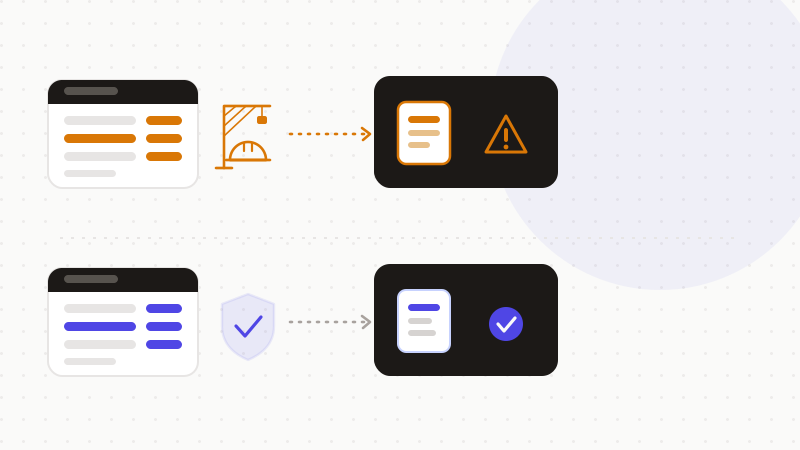
C'est le rôle d'ONYRI Sanitize. Le moteur détecte les données sensibles — prix d'offre, noms de sous-traitants, identifiants d'ouvriers, détails du site — et les remplace par des jetons réversibles avant l'envoi. La détection et le mapping restent dans votre navigateur. Seul un texte anonymisé atteint le modèle. L'IA n'y trouve que des jetons, jamais votre offre ni vos données ouvriers. Vous obtenez l'aide, sans rompre le secret d'affaires ni le RGPD.
Questions fréquentes
- Peut-on utiliser l'IA pour un chantier sans risque ?
- Oui pour la méthode, non avec vos données. L'IA peut rédiger un mode opératoire, vérifier un planning ou mettre en forme un courrier sans aucune donnée sensible. Mais ne collez jamais une offre chiffrée, un tarif sous-traitant ou un rapport d'accident dans une IA grand public. Anonymisez ces éléments avant l'envoi.
- Puis-je coller une offre chiffrée ou un appel d'offres dans ChatGPT ?
- Mieux vaut l'éviter. Un prix d'offre est un secret d'affaires : sa protection dépend du secret. Le coller dans une IA publique l'envoie sur un serveur tiers et peut lui faire perdre cette protection. La plupart des appels d'offres imposent aussi une clause de confidentialité. Remplacez les prix et les noms par des jetons avant l'envoi.
- Les données de mes ouvriers relèvent-elles du RGPD ?
- Oui. Fiches d'accueil, contrôles du droit de travailler, certifications et rapports d'incident sont des données personnelles. Votre entreprise en est le responsable de traitement. Les rapports de blessure contiennent souvent des données de santé, protégées par l'article 9 du RGPD. Gardez ces documents hors des IA grand public.
Sources et références
- Trade Secrets (définition : information commerciale de valeur, protégée tant qu'elle reste secrète) — Organisation Mondiale de la Propriété Intellectuelle (OMPI / WIPO)
- Règlement Général sur la Protection des Données (RGPD, Règlement (UE) 2016/679) : responsable de traitement, principe de sécurité, article 9 — EUR-Lex (Office des publications de l'Union européenne)
- ChatGPT and large language models: what's the risk? (requêtes stockées, entraînement, fuite ; vérifier les conditions) — UK National Cyber Security Centre (NCSC)
Gardez vos données sensibles dans votre navigateur
ONYRI Sanitize détecte et masque vos données sensibles avant l'envoi à l'IA, puis restaure la réponse — du nom à la clé API.