Peut-on utiliser l'IA en concession auto sans risque ?
Oui pour rédiger un message ou une pub, non avec un dossier client : ne collez jamais un SSN, un permis ou une demande de crédit dans une IA grand public.
La réponse tient en une phrase. L'IA peut rédiger un message ou une annonce, mais ne lui confiez jamais un dossier client. Une demande de financement auto est un dossier d'identité très dense. Elle réunit le SSN (Social Security number, le numéro de sécurité sociale américain) ou un identifiant national. Elle réunit aussi le revenu, l'emploi, le permis de conduire et l'historique de crédit. Le tout dans un seul formulaire. Collé dans un ChatGPT grand public, ce dossier part chez un tiers. Aux États-Unis, la FTC Safeguards Rule impose au concessionnaire de protéger ces données. La bonne méthode existe : anonymisez les identifiants du client avant le prompt.
Une demande de financement est un dossier d'identité dense
Un formulaire de crédit auto n'est pas un document ordinaire. Il rassemble tout ce qu'un fraudeur convoite. Le SSN ou l'identifiant national. Le revenu et l'employeur. Le numéro de permis de conduire. L'historique de crédit. Une seule fuite expose l'ensemble d'un coup.
La FTC (Federal Trade Commission, l'agence fédérale américaine du commerce) définit le vol d'identité simplement. C'est l'usage des informations personnelles ou financières d'une personne sans sa permission. La FTC cite exactement les champs qu'une demande de crédit regroupe : le nom et l'adresse, le SSN, et les numéros de compte bancaire ou de carte. Voilà pourquoi ce formulaire est un dossier d'identité si dense.
La FTC conseille aussi de ne donner un SSN que si c'est vraiment nécessaire. Elle rappelle qu'un organisme légitime qui en a déjà besoin ne vous appellera pas à froid pour le demander. La leçon est claire pour une concession. Un SSN n'a rien à faire dans un outil tiers inutile comme un chatbot grand public.
Aux États-Unis, un concessionnaire est un établissement financier
C'est le point que beaucoup ignorent. La FTC Safeguards Rule découle du Gramm-Leach-Bliley Act (GLBA, la loi américaine sur la modernisation des services financiers). Elle traite la plupart des concessionnaires automobiles comme des « établissements financiers ». La raison : ils arrangent, accordent ou conseillent un financement ou un leasing de véhicule. La FTC publie même une FAQ dédiée aux concessions.
Cette FAQ le confirme. Un concessionnaire couvert doit protéger les « informations personnelles non publiques » qu'il collecte sur ses clients. Il doit tenir un programme écrit de sécurité de l'information. Cela inclut des contrôles d'accès, le chiffrement des données client et une supervision du personnel.
Une IA grand public ne fait pas partie de ce programme. Coller un dossier client dedans sort la donnée hors des garde-fous exigés. Attention à la nuance : la règle ne « bannit » pas l'IA. Elle impose de protéger la donnée. Une IA tierce non couverte casse cette protection. C'est là qu'est le risque de conformité.
Un point de portée compte. La règle ne vise que les concessionnaires « significativement engagés » dans une activité financière, comme arranger un financement. Un concessionnaire en vente comptant pure, sans rôle de financement, n'est en général pas couvert. Mais dès qu'il y a du crédit, la règle s'applique.
| Donnée collée dans l'IA | Le vrai statut |
|---|---|
| SSN ou identifiant national du client | Champ n°1 du vol d'identité selon la FTC ; à ne jamais coller |
| Demande de financement complète | Donnée protégée sous la FTC Safeguards Rule / GLBA |
| Numéro de carte de paiement | Relève du PCI DSS ; jamais dans une IA généraliste |
| Permis, revenu, adresse | Données personnelles ; obligations du responsable sous le RGPD / l'ICO |
Côté Europe et Royaume-Uni : ces champs sont des données personnelles
Hors des États-Unis, une autre règle s'applique. Sous le UK GDPR, la version britannique du RGPD, l'ICO (Information Commissioner's Office, le régulateur britannique de la protection des données) donne une définition large. Une donnée personnelle est toute information se rapportant à une personne vivante identifiée ou identifiable.
L'ICO précise qu'un identifiant suffit à rendre une personne identifiable. Un nom. Un numéro d'identification. Un identifiant en ligne. Le numéro de permis, l'identifiant national ou les détails de financement d'un client sont donc des données personnelles. Les traiter fait naître des obligations de responsable de traitement. Un concessionnaire de l'UE tombe sous le RGPD européen, avec le même principe.
L'IA peut aussi se tromper avec assurance
Il y a un second risque, moins évident. Une IA généraliste peut énoncer un taux, une mensualité ou une éligibilité avec un ton assuré. Et se tromper. Pour une transaction de financement réglementée, c'est un double problème. Un préjudice possible pour le client. Un risque de conformité pour la concession.
La règle de sécurité est simple. Traitez toute sortie d'IA sur des termes financiers comme un brouillon à vérifier. Jamais comme une réponse qui fait autorité. Le calcul officiel reste celui de vos systèmes et de votre bailleur.
La parade : anonymiser avant l'envoi
Bonne nouvelle : l'IA reste précieuse en concession. Elle peut rédiger un message de relance, une annonce ou un résumé. Elle peut reformuler une réponse au client. Pour cela, elle n'a besoin d'aucun identifiant réel. Retirez le SSN, le numéro de permis et les autres identifiants avant le prompt. L'IA travaille sur un texte dé-identifié.
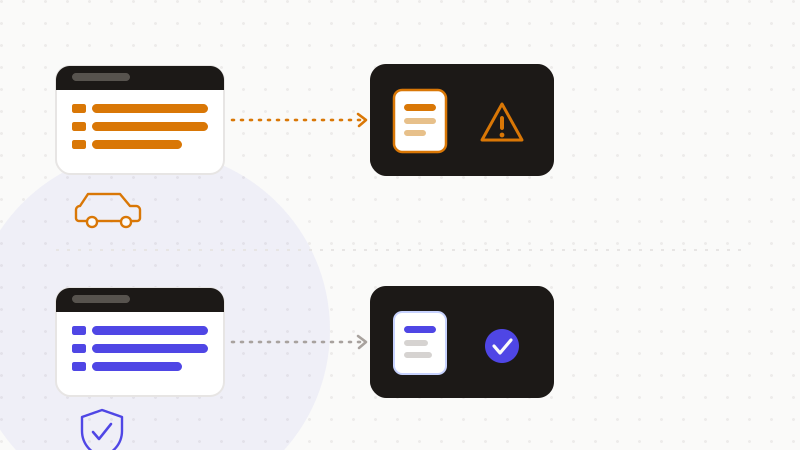
Quand un cas concret est nécessaire, anonymisez d'abord. Remplacez chaque identifiant par un jeton. L'IA raisonne sur la forme de la situation, sans voir les vraies valeurs. Vous restaurez les valeurs réelles ensuite, en local.
- 1Repérez les identifiants : SSN ou ID national, permis, revenu, adresse, numéro de carte.
- 2Remplacez-les par des jetons réversibles, côté navigateur.
- 3Envoyez seulement le texte anonymisé à l'IA.
- 4Restaurez les vraies valeurs dans la réponse, en local.
Quelques règles fixes complètent la méthode côté concession.
- Ne collez jamais une demande de crédit complète ni un SSN dans une IA grand public.
- Gardez la donnée de financement dans vos systèmes conformes.
- N'utilisez que des outils vérifiés, couverts par un accord de traitement des données (DPA).
- Traitez toute sortie d'IA sur les termes financiers comme un brouillon à vérifier.
C'est le rôle d'ONYRI Sanitize. Le moteur détecte les données sensibles — SSN, permis, revenu, adresse, numéro de carte — et les remplace par des jetons réversibles avant l'envoi. La détection et le mapping restent dans votre navigateur. Seul un texte anonymisé atteint le modèle. L'IA n'y trouve que des jetons, jamais le dossier client réel. Vous obtenez l'aide à la rédaction, sans casser les garde-fous que la FTC Safeguards Rule vous demande de tenir.
Questions fréquentes
- Peut-on utiliser l'IA en concession auto sans risque ?
- Oui pour rédiger un message, une annonce ou un résumé, non avec un dossier client. L'IA n'a besoin d'aucun identifiant réel pour écrire. Mais ne collez jamais un SSN, un permis ou une demande de crédit complète dans un ChatGPT grand public. Aux États-Unis, la FTC Safeguards Rule impose de protéger ces données, et coller un dossier dans une IA tierce sort la donnée de vos garde-fous. Anonymisez les identifiants avant l'envoi.
- Une concession est-elle vraiment un « établissement financier » ?
- Oui, dès qu'elle arrange du financement. La FTC Safeguards Rule, issue du Gramm-Leach-Bliley Act (GLBA), traite comme établissement financier tout concessionnaire significativement engagé dans une activité financière, comme arranger un crédit ou un leasing. La FTC publie une FAQ dédiée aux concessions. Une vente comptant pure, sans financement, n'est en général pas couverte.
- Peut-on coller un numéro de carte ou un SSN dans l'IA ?
- Non. Le SSN est le champ n°1 du vol d'identité selon la FTC ; il n'a rien à faire dans un outil tiers inutile. Les numéros de carte relèvent du PCI DSS, la norme du secteur des cartes de paiement, et ne doivent jamais aller dans une IA généraliste. Gardez la donnée de financement dans vos systèmes conformes et anonymisez avant tout prompt.
Sources et références
- Automobile Dealers and the FTC's Safeguards Rule — FAQ (les concessions qui arrangent du financement sont des établissements financiers ; obligations de protection) — U.S. Federal Trade Commission
- What To Know About Identity Theft (définition du vol d'identité ; SSN, nom/adresse, numéros de compte et de carte ciblés) — U.S. Federal Trade Commission (Consumer Advice)
- What is personal data? (un identifiant comme un numéro rend une personne identifiable ; obligations du responsable) — Information Commissioner's Office (ICO), UK
Gardez vos données sensibles dans votre navigateur
ONYRI Sanitize détecte et masque vos données sensibles avant l'envoi à l'IA, puis restaure la réponse — du nom à la clé API.