L'IA apprend-elle de vos données ? Gratuit, payant, opt-out
Vos conversations servent-elles à entraîner l'IA ? Souvent oui par défaut sur le gratuit. Pourquoi l'opt-out ne suffit pas, et la règle qui protège vraiment.
Sur beaucoup d'assistants grand public, vos conversations peuvent servir à améliorer le modèle — souvent activé par défaut sur les offres gratuites. On peut en général s'y opposer (opt-out), et les offres payantes ou « entreprise » ne s'entraînent généralement pas sur vos données. Mais l'opt-out ne gouverne que l'entraînement : votre prompt quitte quand même votre machine et peut être conservé pour d'autres raisons. La règle robuste : ne pas dépendre d'un réglage, et anonymiser les données sensibles avant l'envoi.
Entraînement : souvent activé par défaut
C'est le point que reviennent répéter les utilisateurs avertis : « c'est activé par défaut, tu peux désactiver l'entraînement, mais il faut le faire ». Sur les offres gratuites, le contenu des conversations peut être réutilisé pour entraîner les futurs modèles, sauf si vous changez le réglage. Beaucoup ne le savent pas, ou ne le font jamais.
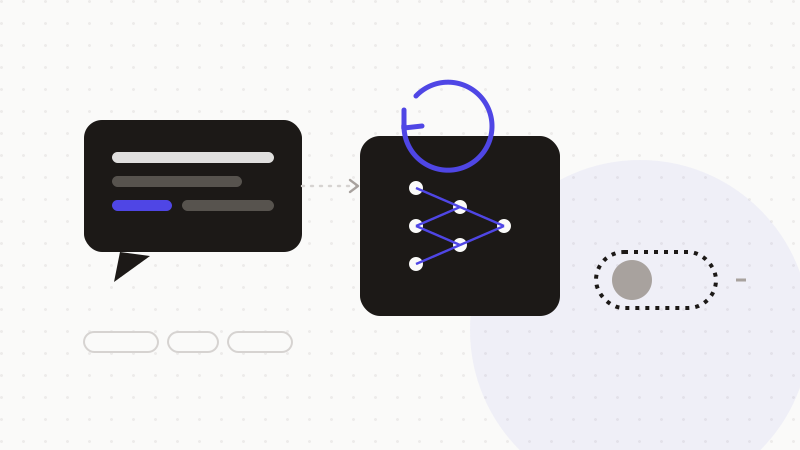
L'opt-out ne couvre que l'entraînement
Désactiver l'entraînement est utile, mais c'est une protection partielle. Une fois envoyé, le prompt peut être journalisé, modéré ou conservé pour des raisons de sécurité ou d'obligations légales — indépendamment du réglage d'entraînement. Et comme le note un commentaire lucide : « on n'a aucune visibilité réelle sur ce qu'ils en font ». L'opt-out demande de faire confiance à une promesse que vous ne pouvez pas vérifier.
- Entraînement : ce que l'opt-out coupe (en théorie).
- Journalisation et modération : peuvent subsister pour la sécurité et l'abus.
- Conservation légale : certaines données sont gardées un temps par obligation.
- Visibilité : vous ne pouvez pas auditer ce qui se passe côté serveur.
Gratuit, payant, API : ce qui change (et ce qui ne change pas)
Les offres payantes et « entreprise » ne réutilisent généralement pas vos contenus pour l'entraînement — c'est souvent la vraie valeur de l'abonnement, plus que la puissance. Mais un point ne change jamais, quelle que soit l'offre : la donnée quitte votre environnement pour être traitée. Payer réduit certains risques ; cela ne remet pas votre donnée sensible sous votre contrôle.
La règle robuste : ne pas dépendre d'un réglage
- 1Détection : un moteur repère les données sensibles dans votre prompt.
- 2Tokenisation : chacune est remplacée par un jeton réversible, gardé en mémoire locale.
- 3Envoi : seul le texte anonymisé part — qu'il serve ou non à l'entraînement, il n'identifie personne.
- 4Restauration : la réponse est détokenisée dans votre navigateur.
ONYRI Sanitize applique cette règle : la détection et le mapping jeton ↔ valeur restent dans votre navigateur, et seul le texte anonymisé atteint le modèle. Que l'entraînement soit activé ou non, il n'y a rien d'identifiant à apprendre.
Questions fréquentes
- L'IA s'entraîne-t-elle vraiment sur mes conversations ?
- Sur beaucoup d'offres grand public, oui par défaut, surtout en gratuit : le contenu peut servir à améliorer les futurs modèles. On peut généralement s'y opposer dans les réglages, mais c'est désactivé manuellement — et beaucoup ne le font jamais.
- Désactiver l'entraînement suffit-il à me protéger ?
- Non. L'opt-out ne couvre que l'entraînement. Le prompt quitte quand même votre machine et peut être journalisé, modéré ou conservé pour d'autres raisons. Pour les données sensibles, la protection efficace est de ne pas les envoyer — donc de les anonymiser avant.
- L'offre payante ou l'API entraîne-t-elle sur mes données ?
- En général non : les offres payantes et entreprise ne réutilisent pas vos contenus pour l'entraînement, et c'est souvent ce que vous payez. Mais la donnée quitte toujours votre environnement. L'anonymisation reste utile quel que soit le tarif.
Sources et références
Gardez vos données sensibles dans votre navigateur
ONYRI Sanitize détecte et masque vos données sensibles avant l'envoi à l'IA, puis restaure la réponse — du nom à la clé API.