Peut-on mettre un extrait Kbis dans une IA ?
Oui, techniquement. Le Kbis est un document public : le risque n'est pas le document, mais les données du dirigeant et le contexte que vous ajoutez.
Oui, vous pouvez techniquement coller un extrait Kbis dans une IA comme ChatGPT. Et non, ce n'est pas la catastrophe qu'on imagine. Le Kbis est un document public : n'importe qui peut le commander auprès du greffe du tribunal de commerce, via Infogreffe. Les informations qu'il contient ne sont donc pas secrètes. Le vrai risque n'est pas le Kbis lui-même. Il tient à ce que vous ajoutez autour : le nom du dirigeant, une adresse personnelle, et surtout le contexte de votre demande.
Idée reçue : « le Kbis est confidentiel »
Beaucoup de dirigeants pensent qu'il ne faut jamais montrer son Kbis. C'est faux. Le Kbis est l'acte officiel qui prouve l'immatriculation d'une entreprise au Registre du commerce et des sociétés (RCS). Il est délivré et authentifié par le greffe du tribunal de commerce, via Infogreffe. Surtout, il est public.
Concrètement, tout le monde peut se le procurer. Le dirigeant l'obtient en ligne pour son entreprise. Un tiers peut aussi le commander auprès d'Infogreffe ou du greffe. À noter au passage : depuis le 1er janvier 2023, l'administration ne le réclame plus systématiquement dans les démarches. L'extrait du Registre national des entreprises (le RNE), au contenu équivalent, le remplace comme justificatif.
Ce que contient vraiment un Kbis
Un Kbis regroupe les informations d'identification de l'entreprise. On y trouve notamment :
- La dénomination sociale et la forme juridique (SARL, SAS, SA…).
- Le numéro SIREN (l'identifiant à neuf chiffres de l'entreprise).
- Le montant du capital et l'adresse du siège social.
- L'activité déclarée de l'entreprise.
- L'identité du ou des dirigeants (les représentants légaux).
Petite précision de vocabulaire. Pour une société (SAS, SARL, SA…), on parle d'extrait Kbis. Pour une personne physique — micro-entreprise ou entreprise individuelle — c'est un extrait K. Dans le langage courant, on dit « Kbis » pour les deux.
Le vrai enjeu : les données du dirigeant et le contexte
Si le document est public, où est le risque ? Il tient à trois choses bien réelles. Aucune ne concerne la confidentialité du Kbis en tant que tel.
D'abord, un Kbis contient des données personnelles. Selon la CNIL, une donnée personnelle est toute information se rapportant à une personne physique identifiée ou identifiable. Le nom d'un dirigeant en est une, même dans un cadre professionnel. Pour une micro-entreprise domiciliée au domicile, l'adresse du siège peut aussi être l'adresse personnelle. Cette donnée-là est plus sensible que la simple raison sociale.
Ensuite, le risque vient surtout du contexte que vous ajoutez. Un Kbis seul, c'est neutre. Mais on colle rarement un Kbis « pour rien ». On l'accompagne d'une situation : un litige avec ce dirigeant, une demande de prêt, une négociation, un avis sur une personne. C'est ce contexte qui devient sensible, pas le Kbis.
Enfin, il y a la combinaison. La CNIL rappelle qu'une personne peut être identifiée indirectement, par le croisement de plusieurs données. Associer un Kbis à d'autres informations constitue déjà un traitement de données personnelles au sens du RGPD. Et tout ce que vous collez entre dans le traitement du fournisseur d'IA.
| Élément | Statut | À anonymiser avant l'IA ? |
|---|---|---|
| Dénomination, SIREN, forme juridique | Public, non secret | Non nécessaire |
| Activité et siège d'une société | Public | Non nécessaire |
| Nom du dirigeant | Donnée personnelle | Oui |
| Adresse personnelle (siège au domicile) | Donnée personnelle plus sensible | Oui |
| Contexte ajouté (litige, prêt, avis) | Non public, sensible | Oui, en priorité |
La solution : anonymiser le dirigeant et le contexte
Bonne nouvelle : vous pouvez travailler un Kbis avec l'IA. Il suffit de faire le tri entre ce qui est public et ce qui ne l'est pas. Voici la marche à suivre :
- 1Gardez ce qui est utile et neutre : la forme juridique, l'activité, la logique de la structure.
- 2Anonymisez le nom du dirigeant, et son adresse personnelle si le siège est à son domicile.
- 3Neutralisez surtout le contexte sensible que vous attachez : le litige, le montant du prêt, la négociation, l'avis sur une personne.
- 4Envoyez le prompt anonymisé, puis restaurez les vraies valeurs dans la réponse, de votre côté.
« Le Kbis est public, donc aucun risque » — vraiment ?
C'est l'objection classique, et elle est à moitié vraie. Oui, le document est public : personne ne vous reprochera de « divulguer » un Kbis. Mais votre situation autour, elle, n'est pas publique. Le litige que vous décrivez, le prêt que vous négociez, l'avis que vous portez sur ce dirigeant : rien de tout cela ne figure au greffe. C'est ce contenu-là qui mérite votre prudence, pas les neuf chiffres du SIREN.
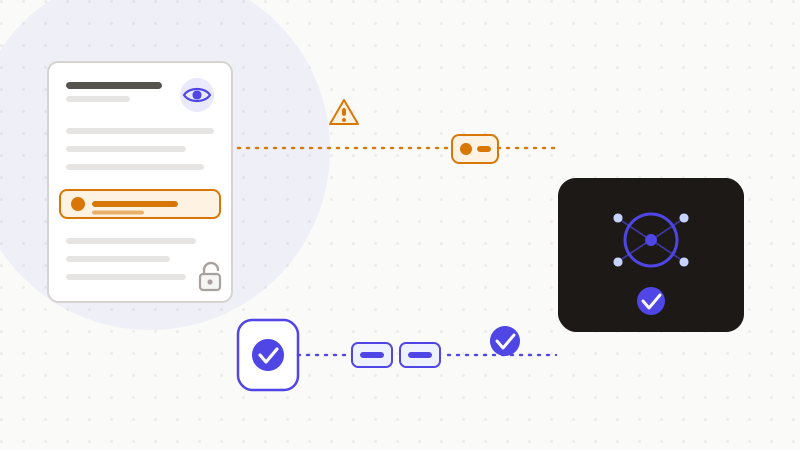
C'est exactement le rôle d'ONYRI Sanitize. Le moteur repère le nom du dirigeant, une adresse personnelle et le contexte sensible, puis les remplace par des jetons réversibles avant l'envoi. La détection et le mapping jeton↔valeur restent dans votre navigateur — seul un texte anonymisé atteint l'IA. Le modèle vous répond, et vous restaurez les vraies valeurs de votre côté. Vous gardez l'usage de l'outil, tout en réduisant l'exposition du dirigeant et de votre contexte.
Questions fréquentes
- Peut-on mettre un extrait Kbis dans une IA comme ChatGPT ?
- Oui, techniquement. Le Kbis est un document public : n'importe qui peut le commander au greffe du tribunal de commerce via Infogreffe, donc ses informations ne sont pas secrètes. Le vrai risque ne vient pas du Kbis, mais du nom du dirigeant, d'une éventuelle adresse personnelle et surtout du contexte que vous ajoutez au prompt. Le bon réflexe : anonymiser ces éléments avant l'envoi.
- Le Kbis est-il confidentiel ?
- Non. Le Kbis est un document public délivré par le greffe du tribunal de commerce, via Infogreffe. Le dirigeant l'obtient pour son entreprise et un tiers peut aussi le commander. Ses informations — dénomination, SIREN, siège, activité, dirigeant — ne sont pas secrètes. Il n'existe pas de devoir de confidentialité sur ce document.
- Quelles données d'un Kbis faut-il protéger avant l'IA ?
- Surtout le nom du dirigeant, une donnée personnelle au sens de la CNIL, et son adresse personnelle si le siège est à son domicile (fréquent pour une micro-entreprise). Et par-dessus tout, le contexte que vous ajoutez : litige, demande de prêt, négociation, avis sur une personne. C'est cette combinaison, entrant dans le traitement du fournisseur d'IA, qu'il faut minimiser.
Sources et références
- Comment obtenir un extrait K ou Kbis ? (fiche service-public) — Service-public / Code du travail numérique
- Comment télécharger un extrait Kbis ? (FAQ Annuaire des Entreprises) — Annuaire des Entreprises / data.gouv.fr (DINUM)
- Donnée personnelle — définition — CNIL
Gardez vos données sensibles dans votre navigateur
ONYRI Sanitize détecte et masque vos données sensibles avant l'envoi à l'IA, puis restaure la réponse — du nom à la clé API.
Anonymiser mon prompt